

FIREFLY
FIREFLY
Forest/Living Realm
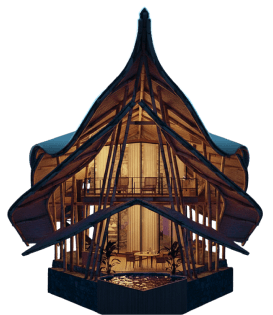
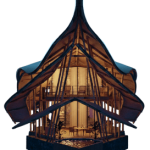
A bamboo residence that investigates lightness, permanence, and the quiet resilience of natural materials.
 Material Shots
 Material Shots
The intent behind this project (why)
Firefly was conceived as an exploration into bamboo's potential as a primary structural and architectural material within a contemporary Indian home. The project moves beyond the idea of bamboo as an experimental or temporary medium, positioning it instead as the backbone of a fully functional, permanent residence.
The design examines how bamboo's inherent lightness, flexibility, and craft-based logic can coexist with modern expectations of comfort, durability, and spatial clarity without defaulting to concrete-intensive construction methods.
Why this project needed to exist
Firefly exists to challenge prevailing perceptions of bamboo architecture in India. Often viewed as informal or impermanent, bamboo is presented here as a refined, engineered, and long-lasting material capable of supporting serious residential architecture.
The project marks a shift from material exploration to architectural accountability demonstrating that alternative building systems can accommodate contemporary lifestyles while maintaining structural integrity and aesthetic depth.
What problem it responds to:
Climatic
Designed for Assam's humid, high-rainfall conditions, the house employs breathable construction, elevation from the ground, and materials that perform and age gracefully in moisture-rich environments.
Cultural
The project repositions bamboo as a material of innovation and dignity, drawing from regional knowledge while expressing it through a modern architectural language.
Emotional
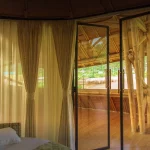
Firefly offers a quiet, tactile living experience one that encourages a deeper connection with material honesty, natural light, and the passage of time.
Site & Context
Set within a dense, forested landscape in Assam, the site is shaped by vegetation, rainfall, and shifting light conditions. Rather than imposing on the terrain, the building adopts a light, porous presence allowing air, light, and movement to flow through it.
Elevated and responsive, the architecture adapts to seasonal changes and prioritizes the experience of land and climate as central to daily living.
Architectural strategy pillars
Structural Logic
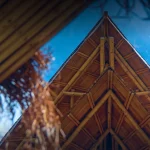
The structure is composed primarily of treated bamboo culms working in compression, tension, and triangulated configurations. Stability is achieved through modular repetition, precise joinery, and a legible structural rhythm rather than mass.
Form Generation
Spaces are composed as layers rather than enclosed rooms, enabling fluid movement, cross-ventilation, and continuous visual connections across levels.
Climatic response
Daylight is moderated through bamboo members and spatial voids, producing evolving light patterns while limiting heat gain within a humid climatic context.
Movement & Experience
Circulation is conceived as a gradual sequence. Ramps, staircases, and moments of pause are designed to slow movement and heighten awareness of material, light, and sound.
Craft Integration
Craft is embedded within the structure itself rather than applied as ornament. Joinery logic, structural rhythm, and exposed detailing collectively define the architectural expression.
Material & Craft language
Type of bamboo used
Treated structural bamboo culms, sourced locally and selected for their suitability in load-bearing construction.
Treatment method
Bamboo undergoes chemical treatment to enhance durability and resistance to pests and moisture, followed by seasoning and protective surface finishes.
Joinery Philosophy
A hybrid joinery system combining bolted steel connections with traditional tied elements, balancing structural precision with material flexibility.
Other Materials
Lime plaster, stone, earth-based finishes, timber accents, and natural textiles support the primary bamboo structure.
Experiential Journey
 Arrival A slow approach through dense vegetation, where the building reveals itself lightly, without asserting visual dominance.
 Threshold A semi-open transitional zone where interior and exterior overlap, articulated through shifts in texture, scale, and light.
 Inner Movement Vertical and horizontal circulation moves through the structure rather than alongside it, keeping occupants engaged with the building's construction and spatial logic.
 Pause / Stillness Intimate moments for rest and reflection, where material presence, light, and shadow take precedence over form.
 Departure The exit retraces earlier paths, reinforcing a renewed awareness of the building's lightness and its relationship with the surrounding landscape.
Environmental decision you're proud of
Employing bamboo as the primary structural material significantly reduces embodied carbon while reinforcing local material economies and craft traditions.
Limitation you consciously accepted
Extended construction timelines were consciously embraced due to the demands of material preparation, detailing, and hands-on craftsmanship.
One trade-off you negotiated
A balance was struck between material purity and the use of metal connectors to ensure structural safety, performance, and long-term durability.

FIREFLY
Forest/Living Realm
A bamboo residence that investigates lightness, permanence, and the quiet resilience of natural materials.
Material Shots
Material Shots
The intent behind this project (why)
Firefly was conceived as an exploration into bamboo's potential as a primary structural and architectural material within a contemporary Indian home. The project moves beyond the idea of bamboo as an experimental or temporary medium, positioning it instead as the backbone of a fully functional, permanent residence.
The design examines how bamboo's inherent lightness, flexibility, and craft-based logic can coexist with modern expectations of comfort, durability, and spatial clarity without defaulting to concrete-intensive construction methods.
Why this project needed to exist
Firefly exists to challenge prevailing perceptions of bamboo architecture in India. Often viewed as informal or impermanent, bamboo is presented here as a refined, engineered, and long-lasting material capable of supporting serious residential architecture.
The project marks a shift from material exploration to architectural accountability demonstrating that alternative building systems can accommodate contemporary lifestyles while maintaining structural integrity and aesthetic depth.
What problem it responds to:
Climatic
Designed for Assam's humid, high-rainfall conditions, the house employs breathable construction, elevation from the ground, and materials that perform and age gracefully in moisture-rich environments.
Cultural
The project repositions bamboo as a material of innovation and dignity, drawing from regional knowledge while expressing it through a modern architectural language.
Emotional
Firefly offers a quiet, tactile living experience one that encourages a deeper connection with material honesty, natural light, and the passage of time.
Site & Context
Set within a dense, forested landscape in Assam, the site is shaped by vegetation, rainfall, and shifting light conditions. Rather than imposing on the terrain, the building adopts a light, porous presence allowing air, light, and movement to flow through it.
Elevated and responsive, the architecture adapts to seasonal changes and prioritizes the experience of land and climate as central to daily living.
Architectural strategy pillars
Structural Logic
The structure is composed primarily of treated bamboo culms working in compression, tension, and triangulated configurations. Stability is achieved through modular repetition, precise joinery, and a legible structural rhythm rather than mass.
Form Generation
Spaces are composed as layers rather than enclosed rooms, enabling fluid movement, cross-ventilation, and continuous visual connections across levels.
Climatic response
Daylight is moderated through bamboo members and spatial voids, producing evolving light patterns while limiting heat gain within a humid climatic context.
Movement & Experience
Circulation is conceived as a gradual sequence. Ramps, staircases, and moments of pause are designed to slow movement and heighten awareness of material, light, and sound.
Craft Integration
Craft is embedded within the structure itself rather than applied as ornament. Joinery logic, structural rhythm, and exposed detailing collectively define the architectural expression.
Material & Craft language
Type of bamboo used
Treated structural bamboo culms, sourced locally and selected for their suitability in load-bearing construction.
Treatment method
Bamboo undergoes chemical treatment to enhance durability and resistance to pests and moisture, followed by seasoning and protective surface finishes.
Joinery Philosophy
A hybrid joinery system combining bolted steel connections with traditional tied elements, balancing structural precision with material flexibility.
Other Materials
Lime plaster, stone, earth-based finishes, timber accents, and natural textiles support the primary bamboo structure.
Experiential Journey
- Arrival A slow approach through dense vegetation, where the building reveals itself lightly, without asserting visual dominance.
- Threshold A semi-open transitional zone where interior and exterior overlap, articulated through shifts in texture, scale, and light.
- Inner Movement Vertical and horizontal circulation moves through the structure rather than alongside it, keeping occupants engaged with the building's construction and spatial logic.
- Pause / Stillness Intimate moments for rest and reflection, where material presence, light, and shadow take precedence over form.
- Departure The exit retraces earlier paths, reinforcing a renewed awareness of the building's lightness and its relationship with the surrounding landscape.
Environmental decision you're proud of
Employing bamboo as the primary structural material significantly reduces embodied carbon while reinforcing local material economies and craft traditions.
Limitation you consciously accepted
Extended construction timelines were consciously embraced due to the demands of material preparation, detailing, and hands-on craftsmanship.
One trade-off you negotiated
A balance was struck between material purity and the use of metal connectors to ensure structural safety, performance, and long-term durability.

FIREFLY
Forest/Living Realm
A bamboo residence that investigates lightness, permanence, and the quiet resilience of natural materials.
Material Shots
Material Shots
The intent behind this project (why)
Firefly was conceived as an exploration into bamboo's potential as a primary structural and architectural material within a contemporary Indian home. The project moves beyond the idea of bamboo as an experimental or temporary medium, positioning it instead as the backbone of a fully functional, permanent residence.
The design examines how bamboo's inherent lightness, flexibility, and craft-based logic can coexist with modern expectations of comfort, durability, and spatial clarity without defaulting to concrete-intensive construction methods.
Why this project needed to exist
Firefly exists to challenge prevailing perceptions of bamboo architecture in India. Often viewed as informal or impermanent, bamboo is presented here as a refined, engineered, and long-lasting material capable of supporting serious residential architecture.
The project marks a shift from material exploration to architectural accountability demonstrating that alternative building systems can accommodate contemporary lifestyles while maintaining structural integrity and aesthetic depth.
What problem it responds to:
Climatic
Designed for Assam's humid, high-rainfall conditions, the house employs breathable construction, elevation from the ground, and materials that perform and age gracefully in moisture-rich environments.
Cultural
The project repositions bamboo as a material of innovation and dignity, drawing from regional knowledge while expressing it through a modern architectural language.
Emotional
Firefly offers a quiet, tactile living experience one that encourages a deeper connection with material honesty, natural light, and the passage of time.
Site & Context
Set within a dense, forested landscape in Assam, the site is shaped by vegetation, rainfall, and shifting light conditions. Rather than imposing on the terrain, the building adopts a light, porous presence allowing air, light, and movement to flow through it.
Elevated and responsive, the architecture adapts to seasonal changes and prioritizes the experience of land and climate as central to daily living.
Architectural strategy pillars
Structural Logic
The structure is composed primarily of treated bamboo culms working in compression, tension, and triangulated configurations. Stability is achieved through modular repetition, precise joinery, and a legible structural rhythm rather than mass.
Form Generation
Spaces are composed as layers rather than enclosed rooms, enabling fluid movement, cross-ventilation, and continuous visual connections across levels.
Climatic response
Daylight is moderated through bamboo members and spatial voids, producing evolving light patterns while limiting heat gain within a humid climatic context.
Movement & Experience
Circulation is conceived as a gradual sequence. Ramps, staircases, and moments of pause are designed to slow movement and heighten awareness of material, light, and sound.
Craft Integration
Craft is embedded within the structure itself rather than applied as ornament. Joinery logic, structural rhythm, and exposed detailing collectively define the architectural expression.
Material & Craft language
Type of bamboo used
Treated structural bamboo culms, sourced locally and selected for their suitability in load-bearing construction.
Treatment method
Bamboo undergoes chemical treatment to enhance durability and resistance to pests and moisture, followed by seasoning and protective surface finishes.
Joinery Philosophy
A hybrid joinery system combining bolted steel connections with traditional tied elements, balancing structural precision with material flexibility.
Other Materials
Lime plaster, stone, earth-based finishes, timber accents, and natural textiles support the primary bamboo structure.
Experiential Journey
- Arrival A slow approach through dense vegetation, where the building reveals itself lightly, without asserting visual dominance.
- Threshold A semi-open transitional zone where interior and exterior overlap, articulated through shifts in texture, scale, and light.
- Inner Movement Vertical and horizontal circulation moves through the structure rather than alongside it, keeping occupants engaged with the building's construction and spatial logic.
- Pause / Stillness Intimate moments for rest and reflection, where material presence, light, and shadow take precedence over form.
- Departure The exit retraces earlier paths, reinforcing a renewed awareness of the building's lightness and its relationship with the surrounding landscape.
Environmental decision you're proud of
Employing bamboo as the primary structural material significantly reduces embodied carbon while reinforcing local material economies and craft traditions.
Limitation you consciously accepted
Extended construction timelines were consciously embraced due to the demands of material preparation, detailing, and hands-on craftsmanship.
One trade-off you negotiated
A balance was struck between material purity and the use of metal connectors to ensure structural safety, performance, and long-term durability.
FIREFLY
Forest/Living Realm
A bamboo residence that investigates lightness, permanence, and the quiet resilience of natural materials.
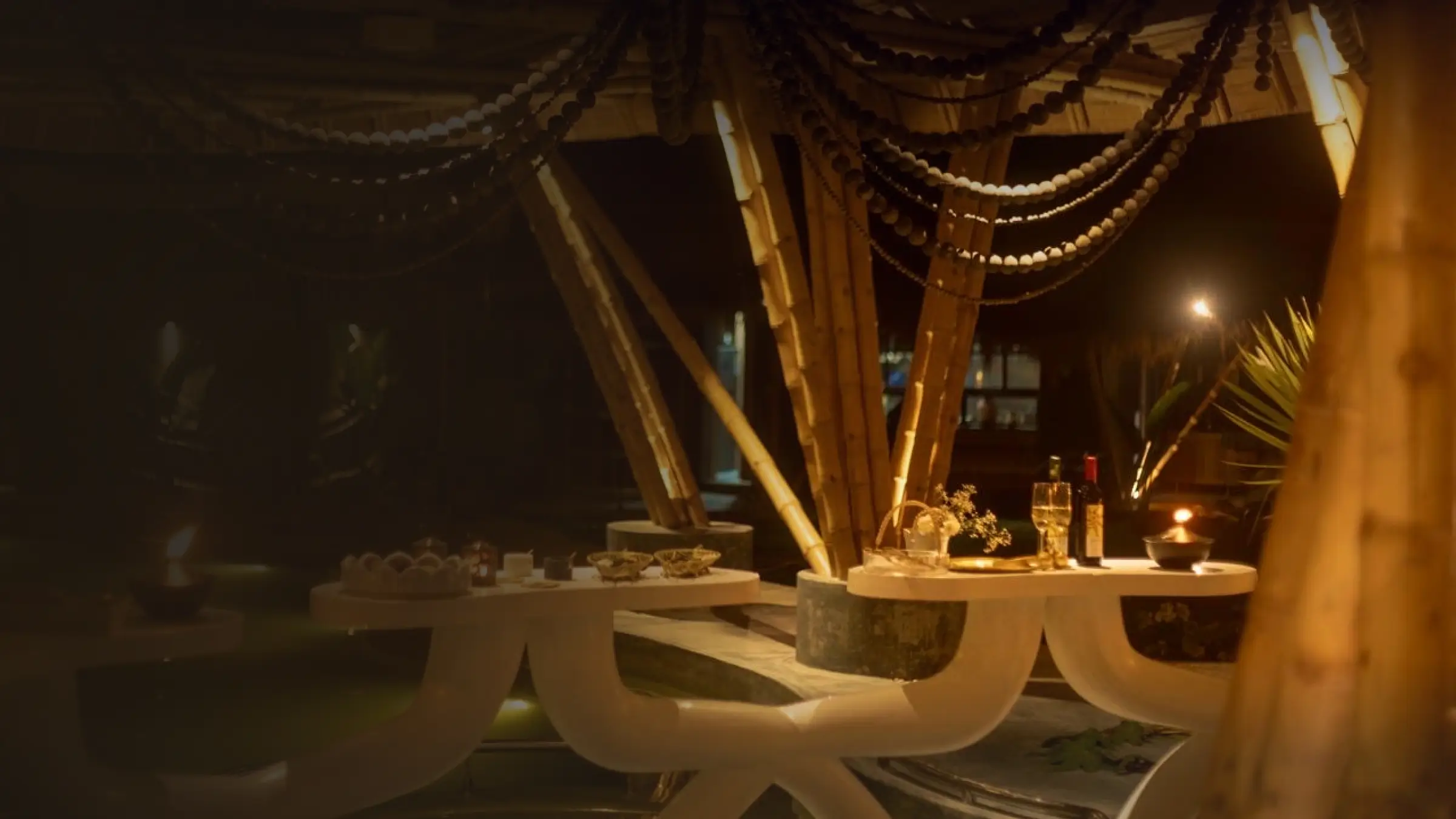
Material Shots
Material Shots
The intent behind this project (why)
Firefly was conceived as an exploration into bamboo's potential as a primary structural and architectural material within a contemporary Indian home. The project moves beyond the idea of bamboo as an experimental or temporary medium, positioning it instead as the backbone of a fully functional, permanent residence.
The design examines how bamboo's inherent lightness, flexibility, and craft-based logic can coexist with modern expectations of comfort, durability, and spatial clarity without defaulting to concrete-intensive construction methods.
Why this project needed to exist
Firefly exists to challenge prevailing perceptions of bamboo architecture in India. Often viewed as informal or impermanent, bamboo is presented here as a refined, engineered, and long-lasting material capable of supporting serious residential architecture.
The project marks a shift from material exploration to architectural accountability demonstrating that alternative building systems can accommodate contemporary lifestyles while maintaining structural integrity and aesthetic depth.
What problem it responds to:
Climatic
Designed for Assam's humid, high-rainfall conditions, the house employs breathable construction, elevation from the ground, and materials that perform and age gracefully in moisture-rich environments.
Cultural
The project repositions bamboo as a material of innovation and dignity, drawing from regional knowledge while expressing it through a modern architectural language.
Emotional
Firefly offers a quiet, tactile living experience one that encourages a deeper connection with material honesty, natural light, and the passage of time.
Site & Context
Set within a dense, forested landscape in Assam, the site is shaped by vegetation, rainfall, and shifting light conditions. Rather than imposing on the terrain, the building adopts a light, porous presence allowing air, light, and movement to flow through it.
Elevated and responsive, the architecture adapts to seasonal changes and prioritizes the experience of land and climate as central to daily living.
Architectural strategy pillars
Structural Logic
The structure is composed primarily of treated bamboo culms working in compression, tension, and triangulated configurations. Stability is achieved through modular repetition, precise joinery, and a legible structural rhythm rather than mass.
Form Generation
Spaces are composed as layers rather than enclosed rooms, enabling fluid movement, cross-ventilation, and continuous visual connections across levels.
Climatic response
Daylight is moderated through bamboo members and spatial voids, producing evolving light patterns while limiting heat gain within a humid climatic context.
Movement & Experience
Circulation is conceived as a gradual sequence. Ramps, staircases, and moments of pause are designed to slow movement and heighten awareness of material, light, and sound.
Craft Integration
Craft is embedded within the structure itself rather than applied as ornament. Joinery logic, structural rhythm, and exposed detailing collectively define the architectural expression.
Material & Craft language
Type of bamboo used
Treated structural bamboo culms, sourced locally and selected for their suitability in load-bearing construction.
Treatment method
Bamboo undergoes chemical treatment to enhance durability and resistance to pests and moisture, followed by seasoning and protective surface finishes.
Joinery Philosophy
A hybrid joinery system combining bolted steel connections with traditional tied elements, balancing structural precision with material flexibility.
Other Materials
Lime plaster, stone, earth-based finishes, timber accents, and natural textiles support the primary bamboo structure.
Experiential Journey
- Arrival A slow approach through dense vegetation, where the building reveals itself lightly, without asserting visual dominance.
- Threshold A semi-open transitional zone where interior and exterior overlap, articulated through shifts in texture, scale, and light.
- Inner Movement Vertical and horizontal circulation moves through the structure rather than alongside it, keeping occupants engaged with the building's construction and spatial logic.
- Pause / Stillness Intimate moments for rest and reflection, where material presence, light, and shadow take precedence over form.
- Departure The exit retraces earlier paths, reinforcing a renewed awareness of the building's lightness and its relationship with the surrounding landscape.
Environmental decision you're proud of
Employing bamboo as the primary structural material significantly reduces embodied carbon while reinforcing local material economies and craft traditions.
Limitation you consciously accepted
Extended construction timelines were consciously embraced due to the demands of material preparation, detailing, and hands-on craftsmanship.
One trade-off you negotiated
A balance was struck between material purity and the use of metal connectors to ensure structural safety, performance, and long-term durability.
FIREFLY
Forest/Living Realm
A bamboo residence that investigates lightness, permanence, and the quiet resilience of natural materials.
Material Shots
Material Shots
The intent behind this project (why)
Firefly was conceived as an exploration into bamboo's potential as a primary structural and architectural material within a contemporary Indian home. The project moves beyond the idea of bamboo as an experimental or temporary medium, positioning it instead as the backbone of a fully functional, permanent residence.
The design examines how bamboo's inherent lightness, flexibility, and craft-based logic can coexist with modern expectations of comfort, durability, and spatial clarity without defaulting to concrete-intensive construction methods.
Why this project needed to exist
Firefly exists to challenge prevailing perceptions of bamboo architecture in India. Often viewed as informal or impermanent, bamboo is presented here as a refined, engineered, and long-lasting material capable of supporting serious residential architecture.
The project marks a shift from material exploration to architectural accountability demonstrating that alternative building systems can accommodate contemporary lifestyles while maintaining structural integrity and aesthetic depth.
What problem it responds to:
Climatic
Designed for Assam's humid, high-rainfall conditions, the house employs breathable construction, elevation from the ground, and materials that perform and age gracefully in moisture-rich environments.
Cultural
The project repositions bamboo as a material of innovation and dignity, drawing from regional knowledge while expressing it through a modern architectural language.
Emotional
Firefly offers a quiet, tactile living experience one that encourages a deeper connection with material honesty, natural light, and the passage of time.
Site & Context
Set within a dense, forested landscape in Assam, the site is shaped by vegetation, rainfall, and shifting light conditions. Rather than imposing on the terrain, the building adopts a light, porous presence allowing air, light, and movement to flow through it.
Elevated and responsive, the architecture adapts to seasonal changes and prioritizes the experience of land and climate as central to daily living.
Architectural strategy pillars
Structural Logic
The structure is composed primarily of treated bamboo culms working in compression, tension, and triangulated configurations. Stability is achieved through modular repetition, precise joinery, and a legible structural rhythm rather than mass.
Form Generation
Spaces are composed as layers rather than enclosed rooms, enabling fluid movement, cross-ventilation, and continuous visual connections across levels.
Climatic response
Daylight is moderated through bamboo members and spatial voids, producing evolving light patterns while limiting heat gain within a humid climatic context.
Movement & Experience
Circulation is conceived as a gradual sequence. Ramps, staircases, and moments of pause are designed to slow movement and heighten awareness of material, light, and sound.
Craft Integration
Craft is embedded within the structure itself rather than applied as ornament. Joinery logic, structural rhythm, and exposed detailing collectively define the architectural expression.
Material & Craft language
Type of bamboo used
Treated structural bamboo culms, sourced locally and selected for their suitability in load-bearing construction.
Treatment method
Bamboo undergoes chemical treatment to enhance durability and resistance to pests and moisture, followed by seasoning and protective surface finishes.
Joinery Philosophy
A hybrid joinery system combining bolted steel connections with traditional tied elements, balancing structural precision with material flexibility.
Other Materials
Lime plaster, stone, earth-based finishes, timber accents, and natural textiles support the primary bamboo structure.
Experiential Journey
- Arrival A slow approach through dense vegetation, where the building reveals itself lightly, without asserting visual dominance.
- Threshold A semi-open transitional zone where interior and exterior overlap, articulated through shifts in texture, scale, and light.
- Inner Movement Vertical and horizontal circulation moves through the structure rather than alongside it, keeping occupants engaged with the building's construction and spatial logic.
- Pause / Stillness Intimate moments for rest and reflection, where material presence, light, and shadow take precedence over form.
- Departure The exit retraces earlier paths, reinforcing a renewed awareness of the building's lightness and its relationship with the surrounding landscape.
Environmental decision you're proud of
Employing bamboo as the primary structural material significantly reduces embodied carbon while reinforcing local material economies and craft traditions.
Limitation you consciously accepted
Extended construction timelines were consciously embraced due to the demands of material preparation, detailing, and hands-on craftsmanship.
One trade-off you negotiated
A balance was struck between material purity and the use of metal connectors to ensure structural safety, performance, and long-term durability.
FIREFLY
Forest/Living Realm
A bamboo residence that investigates lightness, permanence, and the quiet resilience of natural materials.
Material Shots
Material Shots
The intent behind this project (why)
Firefly was conceived as an exploration into bamboo's potential as a primary structural and architectural material within a contemporary Indian home. The project moves beyond the idea of bamboo as an experimental or temporary medium, positioning it instead as the backbone of a fully functional, permanent residence.
The design examines how bamboo's inherent lightness, flexibility, and craft-based logic can coexist with modern expectations of comfort, durability, and spatial clarity without defaulting to concrete-intensive construction methods.
Why this project needed to exist
Firefly exists to challenge prevailing perceptions of bamboo architecture in India. Often viewed as informal or impermanent, bamboo is presented here as a refined, engineered, and long-lasting material capable of supporting serious residential architecture.
The project marks a shift from material exploration to architectural accountability demonstrating that alternative building systems can accommodate contemporary lifestyles while maintaining structural integrity and aesthetic depth.
What problem it responds to:
Climatic
Designed for Assam's humid, high-rainfall conditions, the house employs breathable construction, elevation from the ground, and materials that perform and age gracefully in moisture-rich environments.
Cultural
The project repositions bamboo as a material of innovation and dignity, drawing from regional knowledge while expressing it through a modern architectural language.
Emotional
Firefly offers a quiet, tactile living experience one that encourages a deeper connection with material honesty, natural light, and the passage of time.
Site & Context
Set within a dense, forested landscape in Assam, the site is shaped by vegetation, rainfall, and shifting light conditions. Rather than imposing on the terrain, the building adopts a light, porous presence allowing air, light, and movement to flow through it.
Elevated and responsive, the architecture adapts to seasonal changes and prioritizes the experience of land and climate as central to daily living.
Architectural strategy pillars
Structural Logic
The structure is composed primarily of treated bamboo culms working in compression, tension, and triangulated configurations. Stability is achieved through modular repetition, precise joinery, and a legible structural rhythm rather than mass.
Form Generation
Spaces are composed as layers rather than enclosed rooms, enabling fluid movement, cross-ventilation, and continuous visual connections across levels.
Climatic response
Daylight is moderated through bamboo members and spatial voids, producing evolving light patterns while limiting heat gain within a humid climatic context.
Movement & Experience
Circulation is conceived as a gradual sequence. Ramps, staircases, and moments of pause are designed to slow movement and heighten awareness of material, light, and sound.
Craft Integration
Craft is embedded within the structure itself rather than applied as ornament. Joinery logic, structural rhythm, and exposed detailing collectively define the architectural expression.
Material & Craft language
Type of bamboo used
Treated structural bamboo culms, sourced locally and selected for their suitability in load-bearing construction.
Treatment method
Bamboo undergoes chemical treatment to enhance durability and resistance to pests and moisture, followed by seasoning and protective surface finishes.
Joinery Philosophy
A hybrid joinery system combining bolted steel connections with traditional tied elements, balancing structural precision with material flexibility.
Other Materials
Lime plaster, stone, earth-based finishes, timber accents, and natural textiles support the primary bamboo structure.
Experiential Journey
- Arrival A slow approach through dense vegetation, where the building reveals itself lightly, without asserting visual dominance.
- Threshold A semi-open transitional zone where interior and exterior overlap, articulated through shifts in texture, scale, and light.
- Inner Movement Vertical and horizontal circulation moves through the structure rather than alongside it, keeping occupants engaged with the building's construction and spatial logic.
- Pause / Stillness Intimate moments for rest and reflection, where material presence, light, and shadow take precedence over form.
- Departure The exit retraces earlier paths, reinforcing a renewed awareness of the building's lightness and its relationship with the surrounding landscape.
Environmental decision you're proud of
Employing bamboo as the primary structural material significantly reduces embodied carbon while reinforcing local material economies and craft traditions.
Limitation you consciously accepted
Extended construction timelines were consciously embraced due to the demands of material preparation, detailing, and hands-on craftsmanship.
One trade-off you negotiated
A balance was struck between material purity and the use of metal connectors to ensure structural safety, performance, and long-term durability.
FIREFLY
Forest/Living Realm
A bamboo residence that investigates lightness, permanence, and the quiet resilience of natural materials.
Material Shots
Material Shots
The intent behind this project (why)
Firefly was conceived as an exploration into bamboo's potential as a primary structural and architectural material within a contemporary Indian home. The project moves beyond the idea of bamboo as an experimental or temporary medium, positioning it instead as the backbone of a fully functional, permanent residence.
The design examines how bamboo's inherent lightness, flexibility, and craft-based logic can coexist with modern expectations of comfort, durability, and spatial clarity without defaulting to concrete-intensive construction methods.
Why this project needed to exist
Firefly exists to challenge prevailing perceptions of bamboo architecture in India. Often viewed as informal or impermanent, bamboo is presented here as a refined, engineered, and long-lasting material capable of supporting serious residential architecture.
The project marks a shift from material exploration to architectural accountability demonstrating that alternative building systems can accommodate contemporary lifestyles while maintaining structural integrity and aesthetic depth.
What problem it responds to:
Climatic
Designed for Assam's humid, high-rainfall conditions, the house employs breathable construction, elevation from the ground, and materials that perform and age gracefully in moisture-rich environments.
Cultural
The project repositions bamboo as a material of innovation and dignity, drawing from regional knowledge while expressing it through a modern architectural language.
Emotional
Firefly offers a quiet, tactile living experience one that encourages a deeper connection with material honesty, natural light, and the passage of time.
Site & Context
Set within a dense, forested landscape in Assam, the site is shaped by vegetation, rainfall, and shifting light conditions. Rather than imposing on the terrain, the building adopts a light, porous presence allowing air, light, and movement to flow through it.
Elevated and responsive, the architecture adapts to seasonal changes and prioritizes the experience of land and climate as central to daily living.
Architectural strategy pillars
Structural Logic
The structure is composed primarily of treated bamboo culms working in compression, tension, and triangulated configurations. Stability is achieved through modular repetition, precise joinery, and a legible structural rhythm rather than mass.
Form Generation
Spaces are composed as layers rather than enclosed rooms, enabling fluid movement, cross-ventilation, and continuous visual connections across levels.
Climatic response
Daylight is moderated through bamboo members and spatial voids, producing evolving light patterns while limiting heat gain within a humid climatic context.
Movement & Experience
Circulation is conceived as a gradual sequence. Ramps, staircases, and moments of pause are designed to slow movement and heighten awareness of material, light, and sound.
Craft Integration
Craft is embedded within the structure itself rather than applied as ornament. Joinery logic, structural rhythm, and exposed detailing collectively define the architectural expression.
Material & Craft language
Type of bamboo used
Treated structural bamboo culms, sourced locally and selected for their suitability in load-bearing construction.
Treatment method
Bamboo undergoes chemical treatment to enhance durability and resistance to pests and moisture, followed by seasoning and protective surface finishes.
Joinery Philosophy
A hybrid joinery system combining bolted steel connections with traditional tied elements, balancing structural precision with material flexibility.
Other Materials
Lime plaster, stone, earth-based finishes, timber accents, and natural textiles support the primary bamboo structure.
Experiential Journey
- Arrival A slow approach through dense vegetation, where the building reveals itself lightly, without asserting visual dominance.
- Threshold A semi-open transitional zone where interior and exterior overlap, articulated through shifts in texture, scale, and light.
- Inner Movement Vertical and horizontal circulation moves through the structure rather than alongside it, keeping occupants engaged with the building's construction and spatial logic.
- Pause / Stillness Intimate moments for rest and reflection, where material presence, light, and shadow take precedence over form.
- Departure The exit retraces earlier paths, reinforcing a renewed awareness of the building's lightness and its relationship with the surrounding landscape.
Environmental decision you're proud of
Employing bamboo as the primary structural material significantly reduces embodied carbon while reinforcing local material economies and craft traditions.
Limitation you consciously accepted
Extended construction timelines were consciously embraced due to the demands of material preparation, detailing, and hands-on craftsmanship.
One trade-off you negotiated
A balance was struck between material purity and the use of metal connectors to ensure structural safety, performance, and long-term durability.
FIREFLY
Forest/Living Realm
A bamboo residence that investigates lightness, permanence, and the quiet resilience of natural materials.
Material Shots
Material Shots
The intent behind this project (why)
Firefly was conceived as an exploration into bamboo's potential as a primary structural and architectural material within a contemporary Indian home. The project moves beyond the idea of bamboo as an experimental or temporary medium, positioning it instead as the backbone of a fully functional, permanent residence.
The design examines how bamboo's inherent lightness, flexibility, and craft-based logic can coexist with modern expectations of comfort, durability, and spatial clarity without defaulting to concrete-intensive construction methods.
Why this project needed to exist
Firefly exists to challenge prevailing perceptions of bamboo architecture in India. Often viewed as informal or impermanent, bamboo is presented here as a refined, engineered, and long-lasting material capable of supporting serious residential architecture.
The project marks a shift from material exploration to architectural accountability demonstrating that alternative building systems can accommodate contemporary lifestyles while maintaining structural integrity and aesthetic depth.
What problem it responds to:
Climatic
Designed for Assam's humid, high-rainfall conditions, the house employs breathable construction, elevation from the ground, and materials that perform and age gracefully in moisture-rich environments.
Cultural
The project repositions bamboo as a material of innovation and dignity, drawing from regional knowledge while expressing it through a modern architectural language.
Emotional
Firefly offers a quiet, tactile living experience one that encourages a deeper connection with material honesty, natural light, and the passage of time.
Site & Context
Set within a dense, forested landscape in Assam, the site is shaped by vegetation, rainfall, and shifting light conditions. Rather than imposing on the terrain, the building adopts a light, porous presence allowing air, light, and movement to flow through it.
Elevated and responsive, the architecture adapts to seasonal changes and prioritizes the experience of land and climate as central to daily living.
Architectural strategy pillars
Structural Logic
The structure is composed primarily of treated bamboo culms working in compression, tension, and triangulated configurations. Stability is achieved through modular repetition, precise joinery, and a legible structural rhythm rather than mass.
Form Generation
Spaces are composed as layers rather than enclosed rooms, enabling fluid movement, cross-ventilation, and continuous visual connections across levels.
Climatic response
Daylight is moderated through bamboo members and spatial voids, producing evolving light patterns while limiting heat gain within a humid climatic context.
Movement & Experience
Circulation is conceived as a gradual sequence. Ramps, staircases, and moments of pause are designed to slow movement and heighten awareness of material, light, and sound.
Craft Integration
Craft is embedded within the structure itself rather than applied as ornament. Joinery logic, structural rhythm, and exposed detailing collectively define the architectural expression.
Material & Craft language
Type of bamboo used
Treated structural bamboo culms, sourced locally and selected for their suitability in load-bearing construction.
Treatment method
Bamboo undergoes chemical treatment to enhance durability and resistance to pests and moisture, followed by seasoning and protective surface finishes.
Joinery Philosophy
A hybrid joinery system combining bolted steel connections with traditional tied elements, balancing structural precision with material flexibility.
Other Materials
Lime plaster, stone, earth-based finishes, timber accents, and natural textiles support the primary bamboo structure.
Experiential Journey
- Arrival A slow approach through dense vegetation, where the building reveals itself lightly, without asserting visual dominance.
- Threshold A semi-open transitional zone where interior and exterior overlap, articulated through shifts in texture, scale, and light.
- Inner Movement Vertical and horizontal circulation moves through the structure rather than alongside it, keeping occupants engaged with the building's construction and spatial logic.
- Pause / Stillness Intimate moments for rest and reflection, where material presence, light, and shadow take precedence over form.
- Departure The exit retraces earlier paths, reinforcing a renewed awareness of the building's lightness and its relationship with the surrounding landscape.
Environmental decision you're proud of
Employing bamboo as the primary structural material significantly reduces embodied carbon while reinforcing local material economies and craft traditions.
Limitation you consciously accepted
Extended construction timelines were consciously embraced due to the demands of material preparation, detailing, and hands-on craftsmanship.
One trade-off you negotiated
A balance was struck between material purity and the use of metal connectors to ensure structural safety, performance, and long-term durability.
FIREFLY
Forest/Living Realm
A bamboo residence that investigates lightness, permanence, and the quiet resilience of natural materials.
Material Shots
Material Shots
The intent behind this project (why)
Firefly was conceived as an exploration into bamboo's potential as a primary structural and architectural material within a contemporary Indian home. The project moves beyond the idea of bamboo as an experimental or temporary medium, positioning it instead as the backbone of a fully functional, permanent residence.
The design examines how bamboo's inherent lightness, flexibility, and craft-based logic can coexist with modern expectations of comfort, durability, and spatial clarity without defaulting to concrete-intensive construction methods.
Why this project needed to exist
Firefly exists to challenge prevailing perceptions of bamboo architecture in India. Often viewed as informal or impermanent, bamboo is presented here as a refined, engineered, and long-lasting material capable of supporting serious residential architecture.
The project marks a shift from material exploration to architectural accountability demonstrating that alternative building systems can accommodate contemporary lifestyles while maintaining structural integrity and aesthetic depth.
What problem it responds to:
Climatic
Designed for Assam's humid, high-rainfall conditions, the house employs breathable construction, elevation from the ground, and materials that perform and age gracefully in moisture-rich environments.
Cultural
The project repositions bamboo as a material of innovation and dignity, drawing from regional knowledge while expressing it through a modern architectural language.
Emotional
Firefly offers a quiet, tactile living experience one that encourages a deeper connection with material honesty, natural light, and the passage of time.
Site & Context
Set within a dense, forested landscape in Assam, the site is shaped by vegetation, rainfall, and shifting light conditions. Rather than imposing on the terrain, the building adopts a light, porous presence allowing air, light, and movement to flow through it.
Elevated and responsive, the architecture adapts to seasonal changes and prioritizes the experience of land and climate as central to daily living.
Architectural strategy pillars
Structural Logic
The structure is composed primarily of treated bamboo culms working in compression, tension, and triangulated configurations. Stability is achieved through modular repetition, precise joinery, and a legible structural rhythm rather than mass.
Form Generation
Spaces are composed as layers rather than enclosed rooms, enabling fluid movement, cross-ventilation, and continuous visual connections across levels.
Climatic response
Daylight is moderated through bamboo members and spatial voids, producing evolving light patterns while limiting heat gain within a humid climatic context.
Movement & Experience
Circulation is conceived as a gradual sequence. Ramps, staircases, and moments of pause are designed to slow movement and heighten awareness of material, light, and sound.
Craft Integration
Craft is embedded within the structure itself rather than applied as ornament. Joinery logic, structural rhythm, and exposed detailing collectively define the architectural expression.
Material & Craft language
Type of bamboo used
Treated structural bamboo culms, sourced locally and selected for their suitability in load-bearing construction.
Treatment method
Bamboo undergoes chemical treatment to enhance durability and resistance to pests and moisture, followed by seasoning and protective surface finishes.
Joinery Philosophy
A hybrid joinery system combining bolted steel connections with traditional tied elements, balancing structural precision with material flexibility.
Other Materials
Lime plaster, stone, earth-based finishes, timber accents, and natural textiles support the primary bamboo structure.
Experiential Journey
- Arrival A slow approach through dense vegetation, where the building reveals itself lightly, without asserting visual dominance.
- Threshold A semi-open transitional zone where interior and exterior overlap, articulated through shifts in texture, scale, and light.
- Inner Movement Vertical and horizontal circulation moves through the structure rather than alongside it, keeping occupants engaged with the building's construction and spatial logic.
- Pause / Stillness Intimate moments for rest and reflection, where material presence, light, and shadow take precedence over form.
- Departure The exit retraces earlier paths, reinforcing a renewed awareness of the building's lightness and its relationship with the surrounding landscape.
Environmental decision you're proud of
Employing bamboo as the primary structural material significantly reduces embodied carbon while reinforcing local material economies and craft traditions.
Limitation you consciously accepted
Extended construction timelines were consciously embraced due to the demands of material preparation, detailing, and hands-on craftsmanship.
One trade-off you negotiated
A balance was struck between material purity and the use of metal connectors to ensure structural safety, performance, and long-term durability.
FIREFLY
Forest/Living Realm
A bamboo residence that investigates lightness, permanence, and the quiet resilience of natural materials.
Material Shots
Material Shots
The intent behind this project (why)
Firefly was conceived as an exploration into bamboo's potential as a primary structural and architectural material within a contemporary Indian home. The project moves beyond the idea of bamboo as an experimental or temporary medium, positioning it instead as the backbone of a fully functional, permanent residence.
The design examines how bamboo's inherent lightness, flexibility, and craft-based logic can coexist with modern expectations of comfort, durability, and spatial clarity without defaulting to concrete-intensive construction methods.
Why this project needed to exist
Firefly exists to challenge prevailing perceptions of bamboo architecture in India. Often viewed as informal or impermanent, bamboo is presented here as a refined, engineered, and long-lasting material capable of supporting serious residential architecture.
The project marks a shift from material exploration to architectural accountability demonstrating that alternative building systems can accommodate contemporary lifestyles while maintaining structural integrity and aesthetic depth.
What problem it responds to:
Climatic
Designed for Assam's humid, high-rainfall conditions, the house employs breathable construction, elevation from the ground, and materials that perform and age gracefully in moisture-rich environments.
Cultural
The project repositions bamboo as a material of innovation and dignity, drawing from regional knowledge while expressing it through a modern architectural language.
Emotional
Firefly offers a quiet, tactile living experience one that encourages a deeper connection with material honesty, natural light, and the passage of time.
Site & Context
Set within a dense, forested landscape in Assam, the site is shaped by vegetation, rainfall, and shifting light conditions. Rather than imposing on the terrain, the building adopts a light, porous presence allowing air, light, and movement to flow through it.
Elevated and responsive, the architecture adapts to seasonal changes and prioritizes the experience of land and climate as central to daily living.
Architectural strategy pillars
Structural Logic
The structure is composed primarily of treated bamboo culms working in compression, tension, and triangulated configurations. Stability is achieved through modular repetition, precise joinery, and a legible structural rhythm rather than mass.
Form Generation
Spaces are composed as layers rather than enclosed rooms, enabling fluid movement, cross-ventilation, and continuous visual connections across levels.
Climatic response
Daylight is moderated through bamboo members and spatial voids, producing evolving light patterns while limiting heat gain within a humid climatic context.
Movement & Experience
Circulation is conceived as a gradual sequence. Ramps, staircases, and moments of pause are designed to slow movement and heighten awareness of material, light, and sound.
Craft Integration
Craft is embedded within the structure itself rather than applied as ornament. Joinery logic, structural rhythm, and exposed detailing collectively define the architectural expression.
Material & Craft language
Type of bamboo used
Treated structural bamboo culms, sourced locally and selected for their suitability in load-bearing construction.
Treatment method
Bamboo undergoes chemical treatment to enhance durability and resistance to pests and moisture, followed by seasoning and protective surface finishes.
Joinery Philosophy
A hybrid joinery system combining bolted steel connections with traditional tied elements, balancing structural precision with material flexibility.
Other Materials
Lime plaster, stone, earth-based finishes, timber accents, and natural textiles support the primary bamboo structure.
Experiential Journey
- Arrival A slow approach through dense vegetation, where the building reveals itself lightly, without asserting visual dominance.
- Threshold A semi-open transitional zone where interior and exterior overlap, articulated through shifts in texture, scale, and light.
- Inner Movement Vertical and horizontal circulation moves through the structure rather than alongside it, keeping occupants engaged with the building's construction and spatial logic.
- Pause / Stillness Intimate moments for rest and reflection, where material presence, light, and shadow take precedence over form.
- Departure The exit retraces earlier paths, reinforcing a renewed awareness of the building's lightness and its relationship with the surrounding landscape.
Environmental decision you're proud of
Employing bamboo as the primary structural material significantly reduces embodied carbon while reinforcing local material economies and craft traditions.
Limitation you consciously accepted
Extended construction timelines were consciously embraced due to the demands of material preparation, detailing, and hands-on craftsmanship.
One trade-off you negotiated
A balance was struck between material purity and the use of metal connectors to ensure structural safety, performance, and long-term durability.
FIREFLY
Forest/Living Realm
A bamboo residence that investigates lightness, permanence, and the quiet resilience of natural materials.
Material Shots
Material Shots
The intent behind this project (why)
Firefly was conceived as an exploration into bamboo's potential as a primary structural and architectural material within a contemporary Indian home. The project moves beyond the idea of bamboo as an experimental or temporary medium, positioning it instead as the backbone of a fully functional, permanent residence.
The design examines how bamboo's inherent lightness, flexibility, and craft-based logic can coexist with modern expectations of comfort, durability, and spatial clarity without defaulting to concrete-intensive construction methods.
Why this project needed to exist
Firefly exists to challenge prevailing perceptions of bamboo architecture in India. Often viewed as informal or impermanent, bamboo is presented here as a refined, engineered, and long-lasting material capable of supporting serious residential architecture.
The project marks a shift from material exploration to architectural accountability demonstrating that alternative building systems can accommodate contemporary lifestyles while maintaining structural integrity and aesthetic depth.
What problem it responds to:
Climatic
Designed for Assam's humid, high-rainfall conditions, the house employs breathable construction, elevation from the ground, and materials that perform and age gracefully in moisture-rich environments.
Cultural
The project repositions bamboo as a material of innovation and dignity, drawing from regional knowledge while expressing it through a modern architectural language.
Emotional
Firefly offers a quiet, tactile living experience one that encourages a deeper connection with material honesty, natural light, and the passage of time.
Site & Context
Set within a dense, forested landscape in Assam, the site is shaped by vegetation, rainfall, and shifting light conditions. Rather than imposing on the terrain, the building adopts a light, porous presence allowing air, light, and movement to flow through it.
Elevated and responsive, the architecture adapts to seasonal changes and prioritizes the experience of land and climate as central to daily living.
Architectural strategy pillars
Structural Logic
The structure is composed primarily of treated bamboo culms working in compression, tension, and triangulated configurations. Stability is achieved through modular repetition, precise joinery, and a legible structural rhythm rather than mass.
Form Generation
Spaces are composed as layers rather than enclosed rooms, enabling fluid movement, cross-ventilation, and continuous visual connections across levels.
Climatic response
Daylight is moderated through bamboo members and spatial voids, producing evolving light patterns while limiting heat gain within a humid climatic context.
Movement & Experience
Circulation is conceived as a gradual sequence. Ramps, staircases, and moments of pause are designed to slow movement and heighten awareness of material, light, and sound.
Craft Integration
Craft is embedded within the structure itself rather than applied as ornament. Joinery logic, structural rhythm, and exposed detailing collectively define the architectural expression.
Material & Craft language
Type of bamboo used
Treated structural bamboo culms, sourced locally and selected for their suitability in load-bearing construction.
Treatment method
Bamboo undergoes chemical treatment to enhance durability and resistance to pests and moisture, followed by seasoning and protective surface finishes.
Joinery Philosophy
A hybrid joinery system combining bolted steel connections with traditional tied elements, balancing structural precision with material flexibility.
Other Materials
Lime plaster, stone, earth-based finishes, timber accents, and natural textiles support the primary bamboo structure.
Experiential Journey
- Arrival A slow approach through dense vegetation, where the building reveals itself lightly, without asserting visual dominance.
- Threshold A semi-open transitional zone where interior and exterior overlap, articulated through shifts in texture, scale, and light.
- Inner Movement Vertical and horizontal circulation moves through the structure rather than alongside it, keeping occupants engaged with the building's construction and spatial logic.
- Pause / Stillness Intimate moments for rest and reflection, where material presence, light, and shadow take precedence over form.
- Departure The exit retraces earlier paths, reinforcing a renewed awareness of the building's lightness and its relationship with the surrounding landscape.
Environmental decision you're proud of
Employing bamboo as the primary structural material significantly reduces embodied carbon while reinforcing local material economies and craft traditions.
Limitation you consciously accepted
Extended construction timelines were consciously embraced due to the demands of material preparation, detailing, and hands-on craftsmanship.
One trade-off you negotiated
A balance was struck between material purity and the use of metal connectors to ensure structural safety, performance, and long-term durability.
FIREFLY
Forest/Living Realm
A bamboo residence that investigates lightness, permanence, and the quiet resilience of natural materials.
Material Shots
Material Shots
The intent behind this project (why)
Firefly was conceived as an exploration into bamboo's potential as a primary structural and architectural material within a contemporary Indian home. The project moves beyond the idea of bamboo as an experimental or temporary medium, positioning it instead as the backbone of a fully functional, permanent residence.
The design examines how bamboo's inherent lightness, flexibility, and craft-based logic can coexist with modern expectations of comfort, durability, and spatial clarity without defaulting to concrete-intensive construction methods.
Why this project needed to exist
Firefly exists to challenge prevailing perceptions of bamboo architecture in India. Often viewed as informal or impermanent, bamboo is presented here as a refined, engineered, and long-lasting material capable of supporting serious residential architecture.
The project marks a shift from material exploration to architectural accountability demonstrating that alternative building systems can accommodate contemporary lifestyles while maintaining structural integrity and aesthetic depth.
What problem it responds to:
Climatic
Designed for Assam's humid, high-rainfall conditions, the house employs breathable construction, elevation from the ground, and materials that perform and age gracefully in moisture-rich environments.
Cultural
The project repositions bamboo as a material of innovation and dignity, drawing from regional knowledge while expressing it through a modern architectural language.
Emotional
Firefly offers a quiet, tactile living experience one that encourages a deeper connection with material honesty, natural light, and the passage of time.
Site & Context
Set within a dense, forested landscape in Assam, the site is shaped by vegetation, rainfall, and shifting light conditions. Rather than imposing on the terrain, the building adopts a light, porous presence allowing air, light, and movement to flow through it.
Elevated and responsive, the architecture adapts to seasonal changes and prioritizes the experience of land and climate as central to daily living.
Architectural strategy pillars
Structural Logic
The structure is composed primarily of treated bamboo culms working in compression, tension, and triangulated configurations. Stability is achieved through modular repetition, precise joinery, and a legible structural rhythm rather than mass.
Form Generation
Spaces are composed as layers rather than enclosed rooms, enabling fluid movement, cross-ventilation, and continuous visual connections across levels.
Climatic response
Daylight is moderated through bamboo members and spatial voids, producing evolving light patterns while limiting heat gain within a humid climatic context.
Movement & Experience
Circulation is conceived as a gradual sequence. Ramps, staircases, and moments of pause are designed to slow movement and heighten awareness of material, light, and sound.
Craft Integration
Craft is embedded within the structure itself rather than applied as ornament. Joinery logic, structural rhythm, and exposed detailing collectively define the architectural expression.
Material & Craft language
Type of bamboo used
Treated structural bamboo culms, sourced locally and selected for their suitability in load-bearing construction.
Treatment method
Bamboo undergoes chemical treatment to enhance durability and resistance to pests and moisture, followed by seasoning and protective surface finishes.
Joinery Philosophy
A hybrid joinery system combining bolted steel connections with traditional tied elements, balancing structural precision with material flexibility.
Other Materials
Lime plaster, stone, earth-based finishes, timber accents, and natural textiles support the primary bamboo structure.
Experiential Journey
- Arrival A slow approach through dense vegetation, where the building reveals itself lightly, without asserting visual dominance.
- Threshold A semi-open transitional zone where interior and exterior overlap, articulated through shifts in texture, scale, and light.
- Inner Movement Vertical and horizontal circulation moves through the structure rather than alongside it, keeping occupants engaged with the building's construction and spatial logic.
- Pause / Stillness Intimate moments for rest and reflection, where material presence, light, and shadow take precedence over form.
- Departure The exit retraces earlier paths, reinforcing a renewed awareness of the building's lightness and its relationship with the surrounding landscape.
Environmental decision you're proud of
Employing bamboo as the primary structural material significantly reduces embodied carbon while reinforcing local material economies and craft traditions.
Limitation you consciously accepted
Extended construction timelines were consciously embraced due to the demands of material preparation, detailing, and hands-on craftsmanship.
One trade-off you negotiated
A balance was struck between material purity and the use of metal connectors to ensure structural safety, performance, and long-term durability.
FIREFLY
Forest/Living Realm
A bamboo residence that investigates lightness, permanence, and the quiet resilience of natural materials.
Material Shots
Material Shots
The intent behind this project (why)
Firefly was conceived as an exploration into bamboo's potential as a primary structural and architectural material within a contemporary Indian home. The project moves beyond the idea of bamboo as an experimental or temporary medium, positioning it instead as the backbone of a fully functional, permanent residence.
The design examines how bamboo's inherent lightness, flexibility, and craft-based logic can coexist with modern expectations of comfort, durability, and spatial clarity without defaulting to concrete-intensive construction methods.
Why this project needed to exist
Firefly exists to challenge prevailing perceptions of bamboo architecture in India. Often viewed as informal or impermanent, bamboo is presented here as a refined, engineered, and long-lasting material capable of supporting serious residential architecture.
The project marks a shift from material exploration to architectural accountability demonstrating that alternative building systems can accommodate contemporary lifestyles while maintaining structural integrity and aesthetic depth.
What problem it responds to:
Climatic
Designed for Assam's humid, high-rainfall conditions, the house employs breathable construction, elevation from the ground, and materials that perform and age gracefully in moisture-rich environments.
Cultural
The project repositions bamboo as a material of innovation and dignity, drawing from regional knowledge while expressing it through a modern architectural language.
Emotional
Firefly offers a quiet, tactile living experience one that encourages a deeper connection with material honesty, natural light, and the passage of time.
Site & Context
Set within a dense, forested landscape in Assam, the site is shaped by vegetation, rainfall, and shifting light conditions. Rather than imposing on the terrain, the building adopts a light, porous presence allowing air, light, and movement to flow through it.
Elevated and responsive, the architecture adapts to seasonal changes and prioritizes the experience of land and climate as central to daily living.
Architectural strategy pillars
Structural Logic
The structure is composed primarily of treated bamboo culms working in compression, tension, and triangulated configurations. Stability is achieved through modular repetition, precise joinery, and a legible structural rhythm rather than mass.
Form Generation
Spaces are composed as layers rather than enclosed rooms, enabling fluid movement, cross-ventilation, and continuous visual connections across levels.
Climatic response
Daylight is moderated through bamboo members and spatial voids, producing evolving light patterns while limiting heat gain within a humid climatic context.
Movement & Experience
Circulation is conceived as a gradual sequence. Ramps, staircases, and moments of pause are designed to slow movement and heighten awareness of material, light, and sound.
Craft Integration
Craft is embedded within the structure itself rather than applied as ornament. Joinery logic, structural rhythm, and exposed detailing collectively define the architectural expression.
Material & Craft language
Type of bamboo used
Treated structural bamboo culms, sourced locally and selected for their suitability in load-bearing construction.
Treatment method
Bamboo undergoes chemical treatment to enhance durability and resistance to pests and moisture, followed by seasoning and protective surface finishes.
Joinery Philosophy
A hybrid joinery system combining bolted steel connections with traditional tied elements, balancing structural precision with material flexibility.
Other Materials
Lime plaster, stone, earth-based finishes, timber accents, and natural textiles support the primary bamboo structure.
Experiential Journey
- Arrival A slow approach through dense vegetation, where the building reveals itself lightly, without asserting visual dominance.
- Threshold A semi-open transitional zone where interior and exterior overlap, articulated through shifts in texture, scale, and light.
- Inner Movement Vertical and horizontal circulation moves through the structure rather than alongside it, keeping occupants engaged with the building's construction and spatial logic.
- Pause / Stillness Intimate moments for rest and reflection, where material presence, light, and shadow take precedence over form.
- Departure The exit retraces earlier paths, reinforcing a renewed awareness of the building's lightness and its relationship with the surrounding landscape.
Environmental decision you're proud of
Employing bamboo as the primary structural material significantly reduces embodied carbon while reinforcing local material economies and craft traditions.
Limitation you consciously accepted
Extended construction timelines were consciously embraced due to the demands of material preparation, detailing, and hands-on craftsmanship.
One trade-off you negotiated
A balance was struck between material purity and the use of metal connectors to ensure structural safety, performance, and long-term durability.
FIREFLY
Forest/Living Realm
A bamboo residence that investigates lightness, permanence, and the quiet resilience of natural materials.
Material Shots
Material Shots
The intent behind this project (why)
Firefly was conceived as an exploration into bamboo's potential as a primary structural and architectural material within a contemporary Indian home. The project moves beyond the idea of bamboo as an experimental or temporary medium, positioning it instead as the backbone of a fully functional, permanent residence.
The design examines how bamboo's inherent lightness, flexibility, and craft-based logic can coexist with modern expectations of comfort, durability, and spatial clarity without defaulting to concrete-intensive construction methods.
Why this project needed to exist
Firefly exists to challenge prevailing perceptions of bamboo architecture in India. Often viewed as informal or impermanent, bamboo is presented here as a refined, engineered, and long-lasting material capable of supporting serious residential architecture.
The project marks a shift from material exploration to architectural accountability demonstrating that alternative building systems can accommodate contemporary lifestyles while maintaining structural integrity and aesthetic depth.
What problem it responds to:
Climatic
Designed for Assam's humid, high-rainfall conditions, the house employs breathable construction, elevation from the ground, and materials that perform and age gracefully in moisture-rich environments.
Cultural
The project repositions bamboo as a material of innovation and dignity, drawing from regional knowledge while expressing it through a modern architectural language.
Emotional
Firefly offers a quiet, tactile living experience one that encourages a deeper connection with material honesty, natural light, and the passage of time.
Site & Context
Set within a dense, forested landscape in Assam, the site is shaped by vegetation, rainfall, and shifting light conditions. Rather than imposing on the terrain, the building adopts a light, porous presence allowing air, light, and movement to flow through it.
Elevated and responsive, the architecture adapts to seasonal changes and prioritizes the experience of land and climate as central to daily living.
Architectural strategy pillars
Structural Logic
The structure is composed primarily of treated bamboo culms working in compression, tension, and triangulated configurations. Stability is achieved through modular repetition, precise joinery, and a legible structural rhythm rather than mass.
Form Generation
Spaces are composed as layers rather than enclosed rooms, enabling fluid movement, cross-ventilation, and continuous visual connections across levels.
Climatic response
Daylight is moderated through bamboo members and spatial voids, producing evolving light patterns while limiting heat gain within a humid climatic context.
Movement & Experience
Circulation is conceived as a gradual sequence. Ramps, staircases, and moments of pause are designed to slow movement and heighten awareness of material, light, and sound.
Craft Integration
Craft is embedded within the structure itself rather than applied as ornament. Joinery logic, structural rhythm, and exposed detailing collectively define the architectural expression.
Material & Craft language
Type of bamboo used
Treated structural bamboo culms, sourced locally and selected for their suitability in load-bearing construction.
Treatment method
Bamboo undergoes chemical treatment to enhance durability and resistance to pests and moisture, followed by seasoning and protective surface finishes.
Joinery Philosophy
A hybrid joinery system combining bolted steel connections with traditional tied elements, balancing structural precision with material flexibility.
Other Materials
Lime plaster, stone, earth-based finishes, timber accents, and natural textiles support the primary bamboo structure.
Experiential Journey
- Arrival A slow approach through dense vegetation, where the building reveals itself lightly, without asserting visual dominance.
- Threshold A semi-open transitional zone where interior and exterior overlap, articulated through shifts in texture, scale, and light.
- Inner Movement Vertical and horizontal circulation moves through the structure rather than alongside it, keeping occupants engaged with the building's construction and spatial logic.
- Pause / Stillness Intimate moments for rest and reflection, where material presence, light, and shadow take precedence over form.
- Departure The exit retraces earlier paths, reinforcing a renewed awareness of the building's lightness and its relationship with the surrounding landscape.
Environmental decision you're proud of
Employing bamboo as the primary structural material significantly reduces embodied carbon while reinforcing local material economies and craft traditions.
Limitation you consciously accepted
Extended construction timelines were consciously embraced due to the demands of material preparation, detailing, and hands-on craftsmanship.
One trade-off you negotiated
A balance was struck between material purity and the use of metal connectors to ensure structural safety, performance, and long-term durability.
FIREFLY
Forest/Living Realm
A bamboo residence that investigates lightness, permanence, and the quiet resilience of natural materials.
Material Shots
Material Shots
The intent behind this project (why)
Firefly was conceived as an exploration into bamboo's potential as a primary structural and architectural material within a contemporary Indian home. The project moves beyond the idea of bamboo as an experimental or temporary medium, positioning it instead as the backbone of a fully functional, permanent residence.
The design examines how bamboo's inherent lightness, flexibility, and craft-based logic can coexist with modern expectations of comfort, durability, and spatial clarity without defaulting to concrete-intensive construction methods.
Why this project needed to exist
Firefly exists to challenge prevailing perceptions of bamboo architecture in India. Often viewed as informal or impermanent, bamboo is presented here as a refined, engineered, and long-lasting material capable of supporting serious residential architecture.
The project marks a shift from material exploration to architectural accountability demonstrating that alternative building systems can accommodate contemporary lifestyles while maintaining structural integrity and aesthetic depth.
What problem it responds to:
Climatic
Designed for Assam's humid, high-rainfall conditions, the house employs breathable construction, elevation from the ground, and materials that perform and age gracefully in moisture-rich environments.
Cultural
The project repositions bamboo as a material of innovation and dignity, drawing from regional knowledge while expressing it through a modern architectural language.
Emotional
Firefly offers a quiet, tactile living experience one that encourages a deeper connection with material honesty, natural light, and the passage of time.
Site & Context
Set within a dense, forested landscape in Assam, the site is shaped by vegetation, rainfall, and shifting light conditions. Rather than imposing on the terrain, the building adopts a light, porous presence allowing air, light, and movement to flow through it.
Elevated and responsive, the architecture adapts to seasonal changes and prioritizes the experience of land and climate as central to daily living.
Architectural strategy pillars
Structural Logic
The structure is composed primarily of treated bamboo culms working in compression, tension, and triangulated configurations. Stability is achieved through modular repetition, precise joinery, and a legible structural rhythm rather than mass.
Form Generation
Spaces are composed as layers rather than enclosed rooms, enabling fluid movement, cross-ventilation, and continuous visual connections across levels.
Climatic response
Daylight is moderated through bamboo members and spatial voids, producing evolving light patterns while limiting heat gain within a humid climatic context.
Movement & Experience
Circulation is conceived as a gradual sequence. Ramps, staircases, and moments of pause are designed to slow movement and heighten awareness of material, light, and sound.
Craft Integration
Craft is embedded within the structure itself rather than applied as ornament. Joinery logic, structural rhythm, and exposed detailing collectively define the architectural expression.
Material & Craft language
Type of bamboo used
Treated structural bamboo culms, sourced locally and selected for their suitability in load-bearing construction.
Treatment method
Bamboo undergoes chemical treatment to enhance durability and resistance to pests and moisture, followed by seasoning and protective surface finishes.
Joinery Philosophy
A hybrid joinery system combining bolted steel connections with traditional tied elements, balancing structural precision with material flexibility.
Other Materials
Lime plaster, stone, earth-based finishes, timber accents, and natural textiles support the primary bamboo structure.
Experiential Journey
- Arrival A slow approach through dense vegetation, where the building reveals itself lightly, without asserting visual dominance.
- Threshold A semi-open transitional zone where interior and exterior overlap, articulated through shifts in texture, scale, and light.
- Inner Movement Vertical and horizontal circulation moves through the structure rather than alongside it, keeping occupants engaged with the building's construction and spatial logic.
- Pause / Stillness Intimate moments for rest and reflection, where material presence, light, and shadow take precedence over form.
- Departure The exit retraces earlier paths, reinforcing a renewed awareness of the building's lightness and its relationship with the surrounding landscape.
Environmental decision you're proud of
Employing bamboo as the primary structural material significantly reduces embodied carbon while reinforcing local material economies and craft traditions.
Limitation you consciously accepted
Extended construction timelines were consciously embraced due to the demands of material preparation, detailing, and hands-on craftsmanship.
One trade-off you negotiated
A balance was struck between material purity and the use of metal connectors to ensure structural safety, performance, and long-term durability.
FIREFLY
Forest/Living Realm
A bamboo residence that investigates lightness, permanence, and the quiet resilience of natural materials.
Material Shots
Material Shots
The intent behind this project (why)
Firefly was conceived as an exploration into bamboo's potential as a primary structural and architectural material within a contemporary Indian home. The project moves beyond the idea of bamboo as an experimental or temporary medium, positioning it instead as the backbone of a fully functional, permanent residence.
The design examines how bamboo's inherent lightness, flexibility, and craft-based logic can coexist with modern expectations of comfort, durability, and spatial clarity without defaulting to concrete-intensive construction methods.
Why this project needed to exist
Firefly exists to challenge prevailing perceptions of bamboo architecture in India. Often viewed as informal or impermanent, bamboo is presented here as a refined, engineered, and long-lasting material capable of supporting serious residential architecture.
The project marks a shift from material exploration to architectural accountability demonstrating that alternative building systems can accommodate contemporary lifestyles while maintaining structural integrity and aesthetic depth.
What problem it responds to:
Climatic
Designed for Assam's humid, high-rainfall conditions, the house employs breathable construction, elevation from the ground, and materials that perform and age gracefully in moisture-rich environments.
Cultural
The project repositions bamboo as a material of innovation and dignity, drawing from regional knowledge while expressing it through a modern architectural language.
Emotional
Firefly offers a quiet, tactile living experience one that encourages a deeper connection with material honesty, natural light, and the passage of time.
Site & Context
Set within a dense, forested landscape in Assam, the site is shaped by vegetation, rainfall, and shifting light conditions. Rather than imposing on the terrain, the building adopts a light, porous presence allowing air, light, and movement to flow through it.
Elevated and responsive, the architecture adapts to seasonal changes and prioritizes the experience of land and climate as central to daily living.
Architectural strategy pillars
Structural Logic
The structure is composed primarily of treated bamboo culms working in compression, tension, and triangulated configurations. Stability is achieved through modular repetition, precise joinery, and a legible structural rhythm rather than mass.
Form Generation
Spaces are composed as layers rather than enclosed rooms, enabling fluid movement, cross-ventilation, and continuous visual connections across levels.
Climatic response
Daylight is moderated through bamboo members and spatial voids, producing evolving light patterns while limiting heat gain within a humid climatic context.
Movement & Experience
Circulation is conceived as a gradual sequence. Ramps, staircases, and moments of pause are designed to slow movement and heighten awareness of material, light, and sound.
Craft Integration
Craft is embedded within the structure itself rather than applied as ornament. Joinery logic, structural rhythm, and exposed detailing collectively define the architectural expression.
Material & Craft language
Type of bamboo used
Treated structural bamboo culms, sourced locally and selected for their suitability in load-bearing construction.
Treatment method
Bamboo undergoes chemical treatment to enhance durability and resistance to pests and moisture, followed by seasoning and protective surface finishes.
Joinery Philosophy
A hybrid joinery system combining bolted steel connections with traditional tied elements, balancing structural precision with material flexibility.
Other Materials
Lime plaster, stone, earth-based finishes, timber accents, and natural textiles support the primary bamboo structure.
Experiential Journey
- Arrival A slow approach through dense vegetation, where the building reveals itself lightly, without asserting visual dominance.
- Threshold A semi-open transitional zone where interior and exterior overlap, articulated through shifts in texture, scale, and light.
- Inner Movement Vertical and horizontal circulation moves through the structure rather than alongside it, keeping occupants engaged with the building's construction and spatial logic.
- Pause / Stillness Intimate moments for rest and reflection, where material presence, light, and shadow take precedence over form.
- Departure The exit retraces earlier paths, reinforcing a renewed awareness of the building's lightness and its relationship with the surrounding landscape.
Environmental decision you're proud of
Employing bamboo as the primary structural material significantly reduces embodied carbon while reinforcing local material economies and craft traditions.
Limitation you consciously accepted
Extended construction timelines were consciously embraced due to the demands of material preparation, detailing, and hands-on craftsmanship.
One trade-off you negotiated
A balance was struck between material purity and the use of metal connectors to ensure structural safety, performance, and long-term durability.

