
AASTE SPA AT TIPAI
Tipai Wilderness Retreat, Maharashtra
A wilderness wellness sanctuary shaped by earth, stillness, and the sensory character of the grassland forest.
Context: Grassland Forest Wilderness
Site Area: 13,000 sq ft (Approx.)
Ground Coverage: 5742.4 sq ft
Key Highlights
• Wellness retreat embedded within a dry grassland forest ecosystem
• Spatial planning designed around silence, thermal comfort, and sensory decompression
• Program integrates reception, yoga spaces, hydrotherapy zones, treatment suites, salon, gym, wellness
amenities, and operational back-of-house infrastructure within a cohesive spatial framework
• Architecture developed through shaded transitional spaces and naturally ventilated volumes
• Material palette derived from the earthy tonalities and textures of the surrounding wilderness
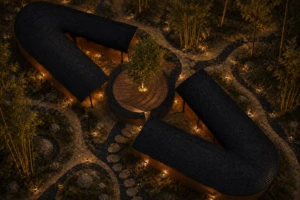
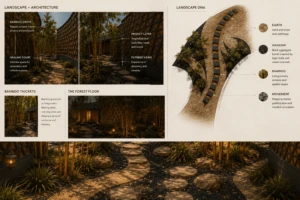
• Landscape planning integrated with native grasses, filtered pathways, and minimally intrusive built interventions
• Planning focused on balancing operational efficiency with experiential privacy and calmness
• Architecture conceived as a retreat from overstimulation rather than a conventional luxury spa aesthetic
Project Narrative
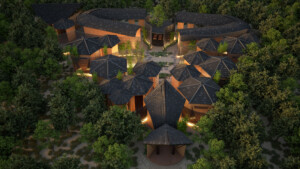
Conceived within the wilderness setting of Tipai, Aaste Spa was envisioned as a retreat for sensory decompression – a space where architecture, atmosphere, and landscape work together to slow the rhythm of experience. Rather than approaching wellness through decorative luxury, the project focuses on stillness, thermal comfort, tactility, and emotional calmness shaped by the surrounding grassland forest ecology.
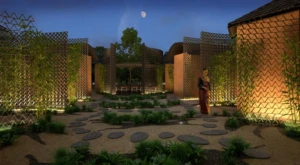
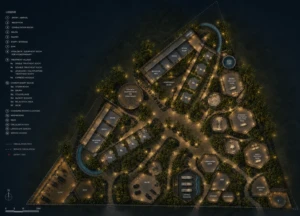
The planning of the spa unfolds as a carefully sequenced journey through shaded transitions, filtered pathways, open breathing spaces, treatment environments, hydrotherapy zones, yoga spaces, and wellness amenities. Every function was positioned to create a gradual shift from movement toward stillness, allowing guests to experience privacy, quietness, and spatial release throughout the retreat.
A central intention behind the architecture was to create a sense of grounding – not only physically through therapies and spatial calmness, but psychologically through memory, materiality, and atmosphere. The project draws from the emotional familiarity of ancestral living environments: the tactile presence of lime-plastered walls, earthy textures, softened light, natural surfaces, and the quiet simplicity associated with traditional homes. These references were intentionally reinterpreted through refined detailing, restrained luxury, polished finishes, and contemporary hospitality standards to create spaces that feel simultaneously rooted and sophisticated.
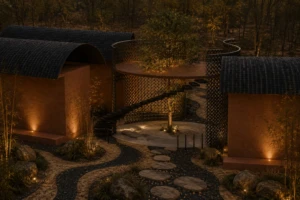
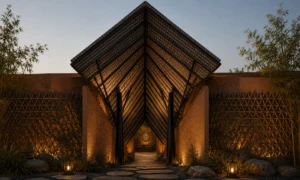
Architecturally, the project responds directly to the climatic intensity of the region – harsh sunlight, dry heat, dust-laden winds, and fluctuating temperatures. Deep overhangs, recessed openings, ventilated volumes, layered roofs, and shaded circulation spaces collectively reduce heat gain while strengthening passive comfort across the facility. The built form avoids excessive enclosure and instead relies on airflow, shadow, texture, and proportion to shape the experience of wellness.
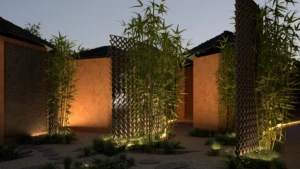
The material palette draws from the muted tones and textures of the surrounding wilderness – lime-based surfaces, stone, bamboo systems, earthy plasters, and natural finishes that allow the architecture to feel grounded within the landscape rather than visually imposed upon it. Rich yet restrained interiors, carefully calibrated lighting, tactile surfaces, and sensorial detailing collectively create an atmosphere that feels calming without intimidation, luxurious without excess, and immersive without spectacle.
Beyond its functional program, Aaste Spa explores wellness as an environmental condition – where restoration emerges through climatic sensitivity, spatial stillness, sensory balance, and a deeper connection with landscape, memory, and self.
AASTE SPA AT TIPAI
AASTE SPA AT TIPAI
Tipai Wilderness Retreat, Maharashtra
A wilderness wellness sanctuary shaped by earth, stillness, and the sensory character of the grassland forest.
Context: Grassland Forest Wilderness
Site Area: 13,000 sq ft (Approx.)
Ground Coverage: 5742.4 sq ft
Key Highlights
• Wellness retreat embedded within a dry grassland forest ecosystem
• Spatial planning designed around silence, thermal comfort, and sensory decompression
• Program integrates reception, yoga spaces, hydrotherapy zones, treatment suites, salon, gym, wellness
amenities, and operational back-of-house infrastructure within a cohesive spatial framework
• Architecture developed through shaded transitional spaces and naturally ventilated volumes
• Material palette derived from the earthy tonalities and textures of the surrounding wilderness
• Landscape planning integrated with native grasses, filtered pathways, and minimally intrusive built interventions
• Planning focused on balancing operational efficiency with experiential privacy and calmness
• Architecture conceived as a retreat from overstimulation rather than a conventional luxury spa aesthetic
Project Narrative
Conceived within the wilderness setting of Tipai, Aaste Spa was envisioned as a retreat for sensory decompression – a space where architecture, atmosphere, and landscape work together to slow the rhythm of experience. Rather than approaching wellness through decorative luxury, the project focuses on stillness, thermal comfort, tactility, and emotional calmness shaped by the surrounding grassland forest ecology.
The planning of the spa unfolds as a carefully sequenced journey through shaded transitions, filtered pathways, open breathing spaces, treatment environments, hydrotherapy zones, yoga spaces, and wellness amenities. Every function was positioned to create a gradual shift from movement toward stillness, allowing guests to experience privacy, quietness, and spatial release throughout the retreat.
A central intention behind the architecture was to create a sense of grounding – not only physically through therapies and spatial calmness, but psychologically through memory, materiality, and atmosphere. The project draws from the emotional familiarity of ancestral living environments: the tactile presence of lime-plastered walls, earthy textures, softened light, natural surfaces, and the quiet simplicity associated with traditional homes. These references were intentionally reinterpreted through refined detailing, restrained luxury, polished finishes, and contemporary hospitality standards to create spaces that feel simultaneously rooted and sophisticated.
Architecturally, the project responds directly to the climatic intensity of the region – harsh sunlight, dry heat, dust-laden winds, and fluctuating temperatures. Deep overhangs, recessed openings, ventilated volumes, layered roofs, and shaded circulation spaces collectively reduce heat gain while strengthening passive comfort across the facility. The built form avoids excessive enclosure and instead relies on airflow, shadow, texture, and proportion to shape the experience of wellness.
The material palette draws from the muted tones and textures of the surrounding wilderness – lime-based surfaces, stone, bamboo systems, earthy plasters, and natural finishes that allow the architecture to feel grounded within the landscape rather than visually imposed upon it. Rich yet restrained interiors, carefully calibrated lighting, tactile surfaces, and sensorial detailing collectively create an atmosphere that feels calming without intimidation, luxurious without excess, and immersive without spectacle.
Beyond its functional program, Aaste Spa explores wellness as an environmental condition – where restoration emerges through climatic sensitivity, spatial stillness, sensory balance, and a deeper connection with landscape, memory, and self.