THE FORT VILLAS AT KARJAT
Client: PPJ Developers
Site Area: 49,665 sq m
Number of Units: 20
Built-up Area (Each Unit): 753.68 sq m
Key Highlights
• Terrain-sensitive luxury villa development planned across a rocky hillscape while preserving the site’s natural topography and geological character.
• Architectural language derived from the defensive planning principles, climatic intelligence, and material permanence of Maratha fort architecture.
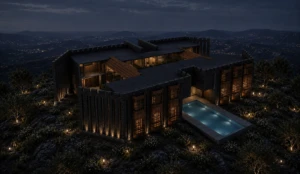
• Minimal excavation strategy using elevated structural systems and stilts to reduce disturbance to the existing basalt terrain and natural undulations.
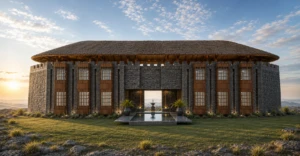
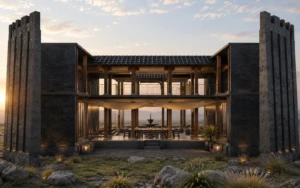
• Two longitudinal fortified stone walls designed as thermal buffers, shielding the interiors from harsh western heat while creating shaded transitional corridors.
• Cross-ventilated spatial planning where shorter facades remain visually porous through vegetation, verandahs, bay windows, and open transitional edges.
• Central courtyard conceived as a climatic lung – regulating airflow, daylight, thermal comfort, and spatial sequencing across the villa.
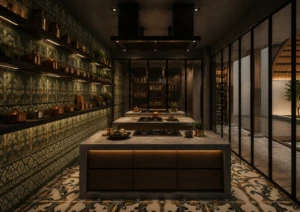
• Material palette rooted in the Deccan landscape through the use of basalt stone, laterite, textured lime plasters, timber detailing, earthy flooring systems, and weathered architectural finishes.
• Panoramic planning strategy ensuring uninterrupted visual engagement with the surrounding hill ranges while maintaining privacy between residences.
• Hospitality-oriented contemporary living integrated with passive cooling systems, shaded outdoor spaces, water elements, elevated decks, and low-maintenance ecological landscaping.
• A contemporary reinterpretation of vernacular Maharashtrian architecture that restores regional identity within emerging luxury developments in Karjat.
Project Narrative
The Fort Villas at Karjat was envisioned as a response to the growing architectural sameness gradually overtaking Indian cities and landscapes. At a time when contemporary developments increasingly detach themselves from climate, geography, and cultural memory, the project attempts to re-establish a stronger relationship between architecture and regional identity through a contemporary interpretation of Maharashtrian fort architecture.
Positioned atop a rugged basalt hillscape in Karjat, the development draws its spatial language from the tectonic character, climatic intelligence, and material restraint historically found within the forts built during the reign of Chhatrapati Shivaji Maharaj. Rather than replicating historical forms literally, the project extracts deeper architectural principles from these fortified environments – thermal massing, shaded thresholds, defensive edges, inward planning, elevated viewing positions, and durable regional materiality – and reinterprets them within a contemporary luxury living framework.
A key design decision was to preserve the natural terrain instead of flattening the hill for construction. The villas therefore emerge lightly above the rocky surface through elevated structural systems and stilts, minimizing excavation while allowing the geography of the site to remain visually and physically dominant. Existing contours, natural rock formations, drainage behavior, and landscape undulations become integral components of the spatial experience rather than obstacles to development.
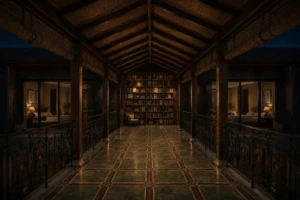
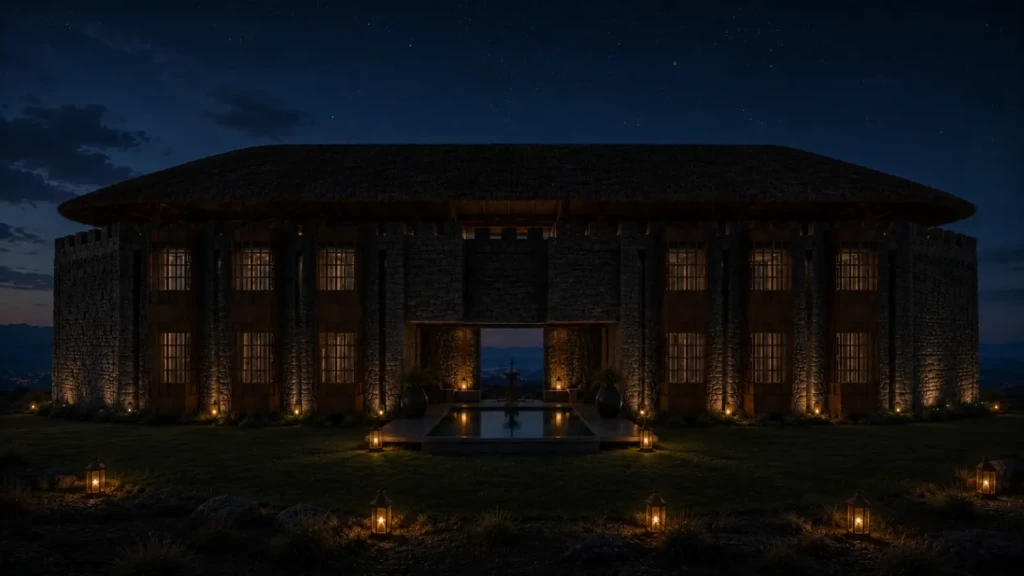
The planning of the villa is organized around a central open court that functions as both a spatial and environmental anchor. Bridges, verandahs, shaded corridors, and transitional decks move around this internal void, generating a layered circulation experience while improving passive cooling and airflow across the residence. Two elongated fort-like walls positioned along the larger edges of the structure act as thermal buffers against the harsh climatic conditions of Karjat, significantly reducing heat gain while creating a strong architectural identity rooted in permanence and protection.
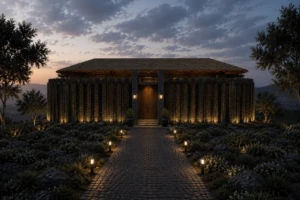
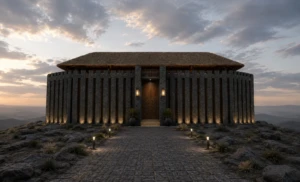
The shorter facades remain comparatively porous and breathable through vegetation buffers, bay windows, screened openings, and shaded sit-outs that frame uninterrupted views toward the surrounding mountain ranges. This balance between solidity and openness allows the architecture to remain climatically responsive without sacrificing spatial luxury or visual connectivity.
Materially, the project remains deeply anchored within the Deccan context. Basalt stone, laterite, textured lime-based surfaces, timber detailing, earthy tones, handcrafted elements, and weathered finishes collectively create an atmosphere that feels grounded, tactile, and regionally authentic. Every architectural component – from railings and battens to bridges, courtyards, thresholds, and landscape edges – was designed to create continuity between the built form and the ruggedness of the site itself.
THE FORT VILLAS AT KARJAT
THE FORT VILLAS AT KARJAT
Client: PPJ Developers
Site Area: 49,665 sq m
Number of Units: 20
Built-up Area (Each Unit): 753.68 sq m
Key Highlights
• Terrain-sensitive luxury villa development planned across a rocky hillscape while preserving the site’s natural topography and geological character.
• Architectural language derived from the defensive planning principles, climatic intelligence, and material permanence of Maratha fort architecture.
• Minimal excavation strategy using elevated structural systems and stilts to reduce disturbance to the existing basalt terrain and natural undulations.
• Two longitudinal fortified stone walls designed as thermal buffers, shielding the interiors from harsh western heat while creating shaded transitional corridors.
• Cross-ventilated spatial planning where shorter facades remain visually porous through vegetation, verandahs, bay windows, and open transitional edges.
• Central courtyard conceived as a climatic lung – regulating airflow, daylight, thermal comfort, and spatial sequencing across the villa.
• Material palette rooted in the Deccan landscape through the use of basalt stone, laterite, textured lime plasters, timber detailing, earthy flooring systems, and weathered architectural finishes.
• Panoramic planning strategy ensuring uninterrupted visual engagement with the surrounding hill ranges while maintaining privacy between residences.
• Hospitality-oriented contemporary living integrated with passive cooling systems, shaded outdoor spaces, water elements, elevated decks, and low-maintenance ecological landscaping.
• A contemporary reinterpretation of vernacular Maharashtrian architecture that restores regional identity within emerging luxury developments in Karjat.
Project Narrative
The Fort Villas at Karjat was envisioned as a response to the growing architectural sameness gradually overtaking Indian cities and landscapes. At a time when contemporary developments increasingly detach themselves from climate, geography, and cultural memory, the project attempts to re-establish a stronger relationship between architecture and regional identity through a contemporary interpretation of Maharashtrian fort architecture.
Positioned atop a rugged basalt hillscape in Karjat, the development draws its spatial language from the tectonic character, climatic intelligence, and material restraint historically found within the forts built during the reign of Chhatrapati Shivaji Maharaj. Rather than replicating historical forms literally, the project extracts deeper architectural principles from these fortified environments – thermal massing, shaded thresholds, defensive edges, inward planning, elevated viewing positions, and durable regional materiality – and reinterprets them within a contemporary luxury living framework.
A key design decision was to preserve the natural terrain instead of flattening the hill for construction. The villas therefore emerge lightly above the rocky surface through elevated structural systems and stilts, minimizing excavation while allowing the geography of the site to remain visually and physically dominant. Existing contours, natural rock formations, drainage behavior, and landscape undulations become integral components of the spatial experience rather than obstacles to development.
The planning of the villa is organized around a central open court that functions as both a spatial and environmental anchor. Bridges, verandahs, shaded corridors, and transitional decks move around this internal void, generating a layered circulation experience while improving passive cooling and airflow across the residence. Two elongated fort-like walls positioned along the larger edges of the structure act as thermal buffers against the harsh climatic conditions of Karjat, significantly reducing heat gain while creating a strong architectural identity rooted in permanence and protection.
The shorter facades remain comparatively porous and breathable through vegetation buffers, bay windows, screened openings, and shaded sit-outs that frame uninterrupted views toward the surrounding mountain ranges. This balance between solidity and openness allows the architecture to remain climatically responsive without sacrificing spatial luxury or visual connectivity.
Materially, the project remains deeply anchored within the Deccan context. Basalt stone, laterite, textured lime-based surfaces, timber detailing, earthy tones, handcrafted elements, and weathered finishes collectively create an atmosphere that feels grounded, tactile, and regionally authentic. Every architectural component – from railings and battens to bridges, courtyards, thresholds, and landscape edges – was designed to create continuity between the built form and the ruggedness of the site itself.