THE GATHERING – CHEF AMNINDER PAVILION
Temporary Dining Installation
An immersive bamboo dining installation translating the spirit of Northeast India into a handcrafted spatial and culinary experience.
Client: Meraki
Collaboration: Chef Amninder Sandhu
Dimensions: Diameter (Overall): 8.0m
Maximum Height: 5.08m
Canopy Height: 2.10m
Central Operating Diameter: 2.72m
Duration of Installation: 4 days
Key Highlights
• Immersive dining installation inspired by the cultural and material identity of Northeast India.
• Nine-entry spatial configuration symbolizing the gathering of tribal heads around a communal dining
space.
• Custom-designed furniture and styling elements developed entirely by Ekarth Studio.
• Layered use of bamboo, woven textures, natural fibres, stones, grasses, and fabric to create an
atmospheric spatial experience.
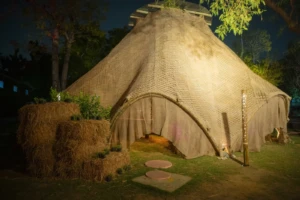
• Contemporary reinterpretation of traditional riverside bamboo shelter typologies.
• Conceptualized over months and executed on site within four days through intensive craft-led
coordination.
Project Narrative
Conceived for The Gathering-a collaborative culinary event bringing together nine chefs and nine artists-the pavilion designed for Chef Amninder Sandhu explored the relationship between food, craft, memory, and spatial atmosphere through an immersive temporary installation inspired by Northeast India.
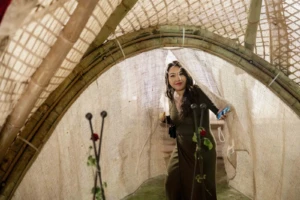
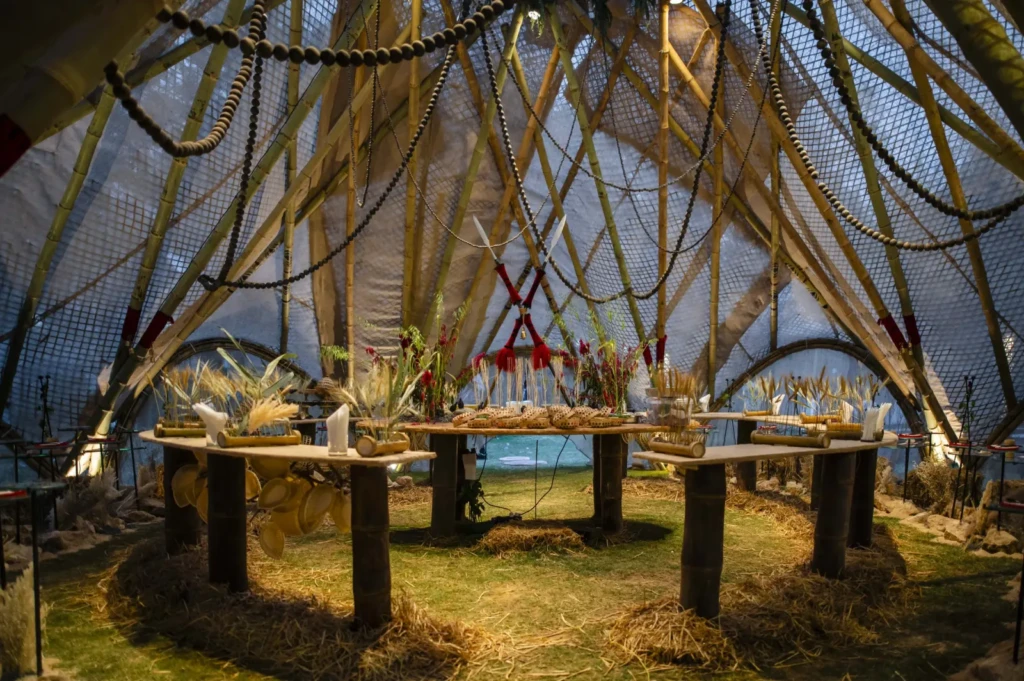
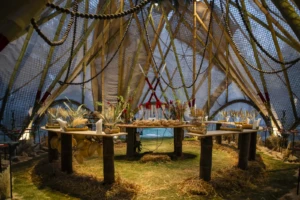
Designed and executed entirely by Ekarth Studio, the pavilion reinterpreted the language of riverside bamboo shelters and northeastern tent structures through a contemporary architectural lens. Developed as a softly enclosed bamboo framework layered with woven surfaces and translucent fabric, the installation created an intimate and breathable dining environment rooted in warmth, tactility, and regional material identity.
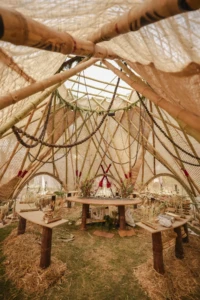
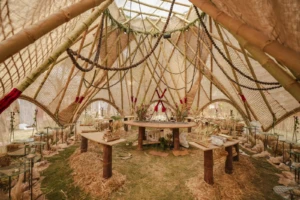
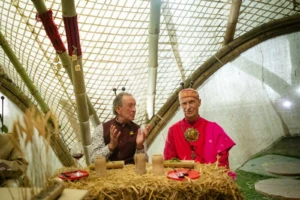
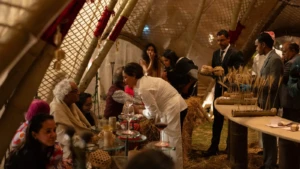
A defining aspect of the spatial concept was the idea of creating a ceremonial gathering space for tribal heads coming together to dine and exchange stories. The pavilion was therefore designed with nine individual entry points, each associated with intimate seating arrangements surrounding a shared central table. This narrative informed not only the architectural planning, but also the scale, detailing, and posture of the custom-designed furniture elements.
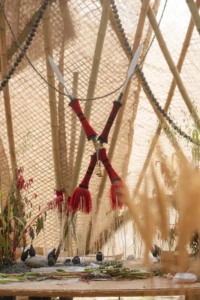
Every layer of the installation-from handcrafted tables and fabricated seating to suspended bead elements, natural grasses, stones, woven textures, floral compositions, and indigenous material references-was conceived as part of a singular spatial language. Traditional references were abstracted rather than replicated, allowing the pavilion to feel contemporary while remaining deeply connected to its cultural inspiration.
Despite its temporary nature, the installation demanded an intensive level of detailing, material sourcing, fabrication, and coordination. Developed over months of preparation and realized on site within just four days, the project demonstrates how temporary architecture can achieve emotional depth, material richness, and immersive spatial storytelling within highly constrained timelines.
THE GATHERING – CHEF AMNINDER PAVILION
THE GATHERING – CHEF AMNINDER PAVILION
Temporary Dining Installation
An immersive bamboo dining installation translating the spirit of Northeast India into a handcrafted spatial and culinary experience.
Client: Meraki
Collaboration: Chef Amninder Sandhu
Dimensions: Diameter (Overall): 8.0m
Maximum Height: 5.08m
Canopy Height: 2.10m
Central Operating Diameter: 2.72m
Duration of Installation: 4 days
Key Highlights
• Immersive dining installation inspired by the cultural and material identity of Northeast India.
• Nine-entry spatial configuration symbolizing the gathering of tribal heads around a communal dining
space.
• Custom-designed furniture and styling elements developed entirely by Ekarth Studio.
• Layered use of bamboo, woven textures, natural fibres, stones, grasses, and fabric to create an
atmospheric spatial experience.
• Contemporary reinterpretation of traditional riverside bamboo shelter typologies.
• Conceptualized over months and executed on site within four days through intensive craft-led
coordination.
Project Narrative
Conceived for The Gathering-a collaborative culinary event bringing together nine chefs and nine artists-the pavilion designed for Chef Amninder Sandhu explored the relationship between food, craft, memory, and spatial atmosphere through an immersive temporary installation inspired by Northeast India.
Designed and executed entirely by Ekarth Studio, the pavilion reinterpreted the language of riverside bamboo shelters and northeastern tent structures through a contemporary architectural lens. Developed as a softly enclosed bamboo framework layered with woven surfaces and translucent fabric, the installation created an intimate and breathable dining environment rooted in warmth, tactility, and regional material identity.
A defining aspect of the spatial concept was the idea of creating a ceremonial gathering space for tribal heads coming together to dine and exchange stories. The pavilion was therefore designed with nine individual entry points, each associated with intimate seating arrangements surrounding a shared central table. This narrative informed not only the architectural planning, but also the scale, detailing, and posture of the custom-designed furniture elements.
Every layer of the installation-from handcrafted tables and fabricated seating to suspended bead elements, natural grasses, stones, woven textures, floral compositions, and indigenous material references-was conceived as part of a singular spatial language. Traditional references were abstracted rather than replicated, allowing the pavilion to feel contemporary while remaining deeply connected to its cultural inspiration.
Despite its temporary nature, the installation demanded an intensive level of detailing, material sourcing, fabrication, and coordination. Developed over months of preparation and realized on site within just four days, the project demonstrates how temporary architecture can achieve emotional depth, material richness, and immersive spatial storytelling within highly constrained timelines.