

THE MANAS RESORT, HOLLONG
THE MANAS RESORT, HOLLONG
Wildlife Resort
A landmark wilderness dining destination informed by the ecology, craftsmanship, and spatial character of Northeast India.
Key Highlights
• Designed as a low-density hospitality retreat prioritizing silence, privacy, and deep immersion within the landscape
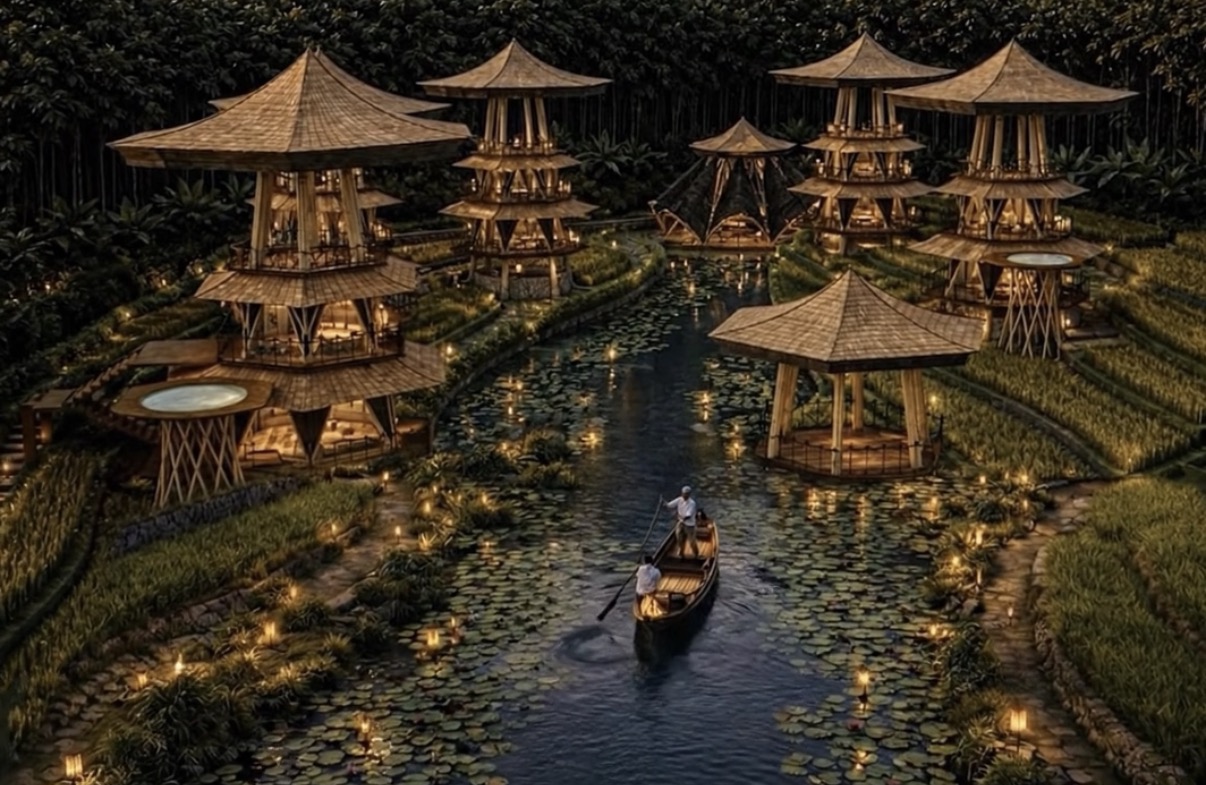
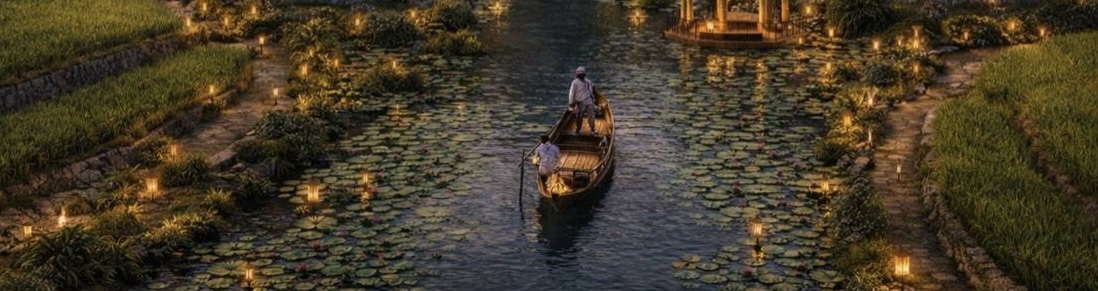
• Masterplan structured around a man-made Assamese Beal water system inspired by the wetland ecologies of the region
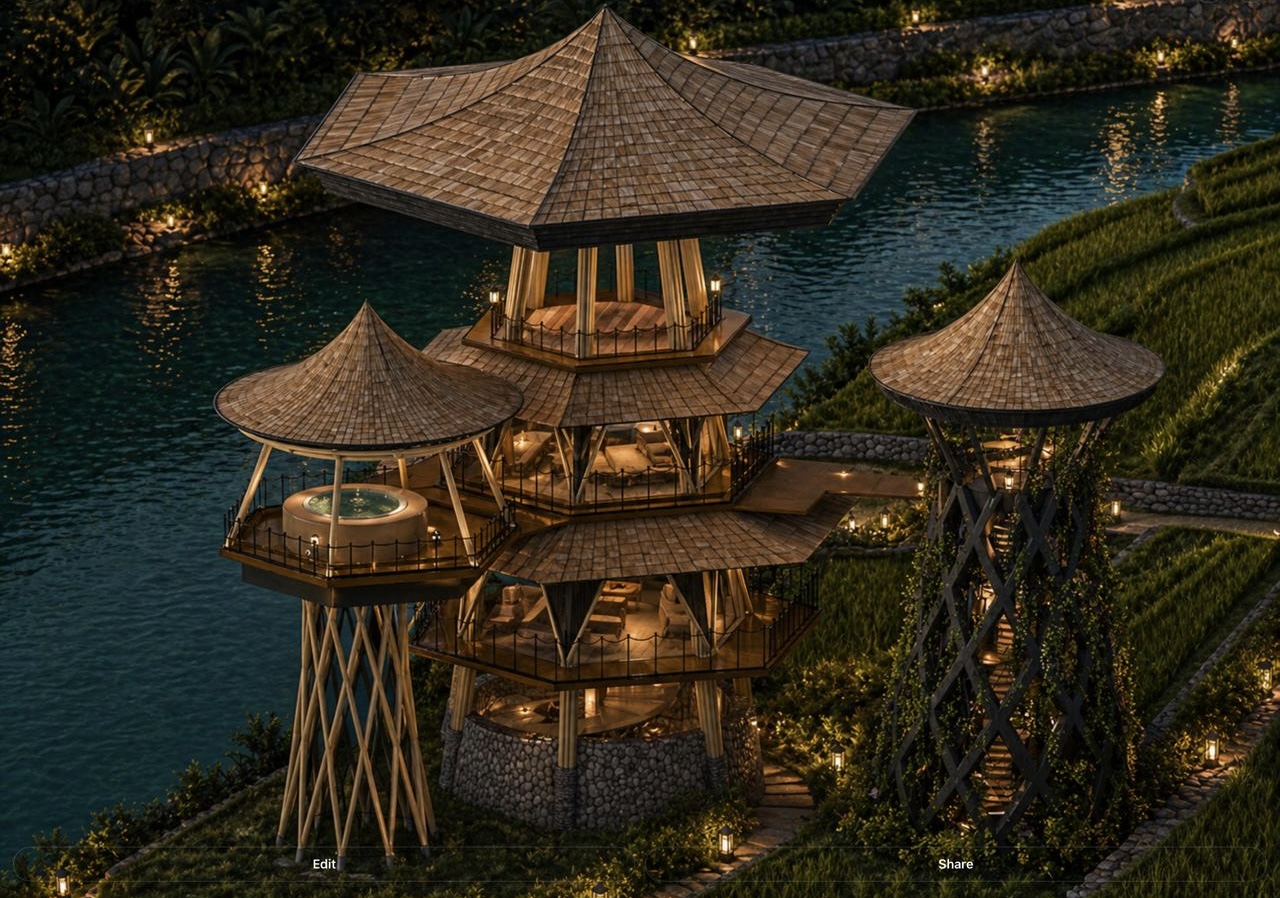
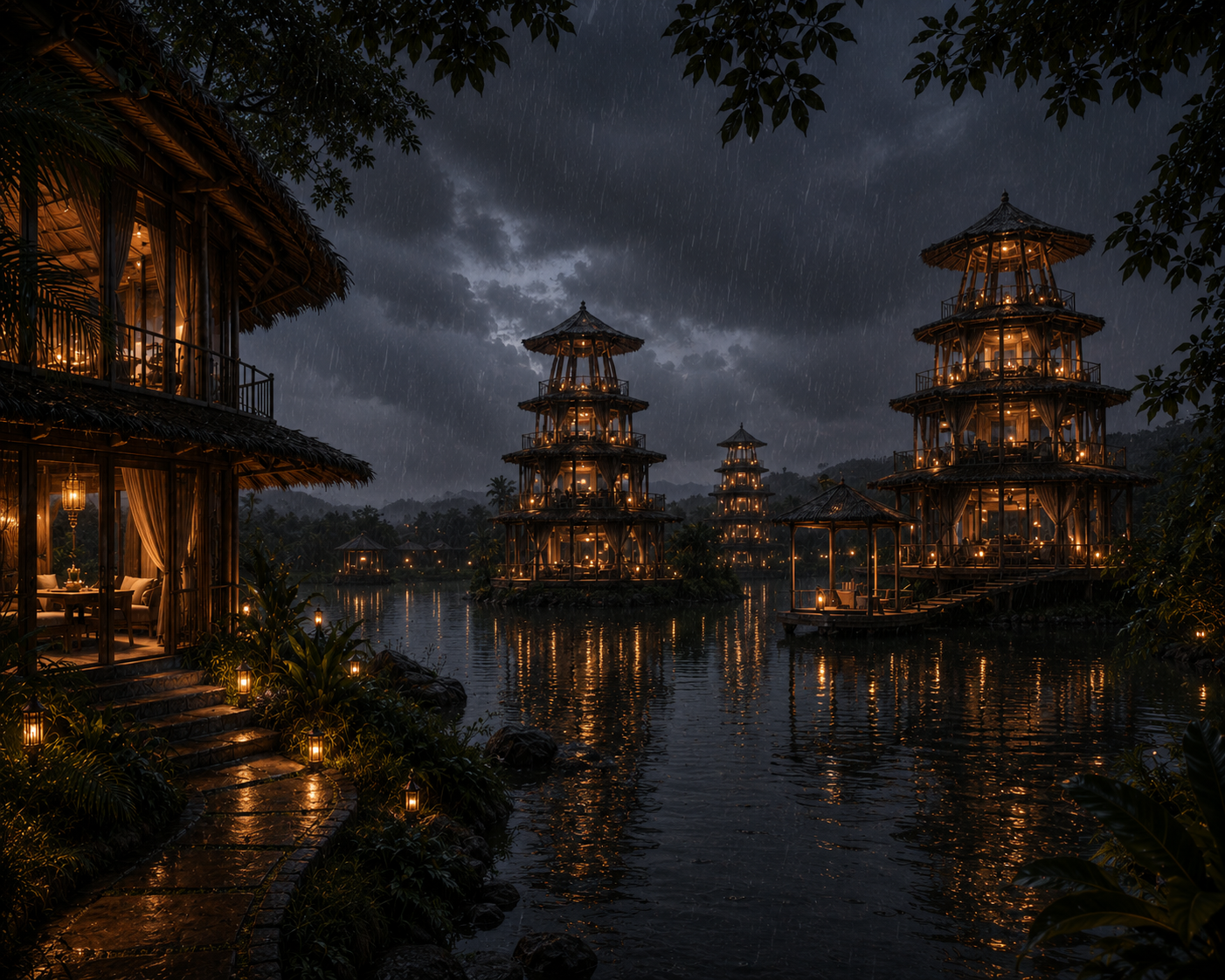
• Five elevated bamboo tower clusters strategically positioned for panoramic forest and plantation views
• Integrated hospitality planning including reception, restaurant connectivity, service circulation, and operational utility infrastructure across the site
• Spatial planning developed to maximize visual openness while maintaining complete privacy between accommodations
• Two vertically stacked cottages integrated within every primary tower structure
• Each residential tower connected through independent staircase towers and elevated bridge circulation
• Landscape language composed of rice fields, bamboo groves, tropical vegetation, aquatic systems, and natural planting buffers
• Pedestrian movement woven through plantations and water edges rather than conventional resort pathways
• Architectural vocabulary informed by Assamese construction traditions and Bhutanese roof forms
• Structural systems engineered for heavy rainfall, humidity, and the high seismic conditions of Northeast India
• Bamboo utilized as the principal structural material through a contemporary hospitality framework
• Elevated lightweight construction minimizes site disturbance while strengthening climatic responsiveness and long-term durability
Project Narrative
Positioned along the edge of Manas National Park, The Hollong was conceived not as a conventional resort, but as a constructed extension of the Assamese landscape itself — an inhabitable ecological terrain where water systems, vegetation, architecture, and hospitality are interwoven into a singular spatial experience. The project draws deeply from the atmosphere of the region: the stillness of wetlands, the density of bamboo groves, the texture of paddy fields, and the layered relationship between forest, rainfall, and settlement patterns found across the Northeast.
The entire masterplan is anchored around a diagonal man-made Beal — a contemporary interpretation of Assam’s native floodplain ecologies. Rather than functioning as a decorative feature, the water spine becomes the organizing intelligence of the site, fragmenting and stitching together the landscape simultaneously. Secondary channels branch outward from the primary body, wrapping around residential clusters and introducing reflections, movement, cooling, aquatic habitats, and recreational engagement into the everyday experience of the retreat.
A deliberate decision was made to resist manicured hospitality aesthetics. In place of ornamental landscaping, the site is choreographed through rice plantations, tropical undergrowth, bamboo thickets, pepper plantations, and peripheral green buffers that preserve both intimacy and environmental continuity. Pathways meander through these planted layers, allowing movement across the property to unfold gradually through shifting atmospheres, filtered light, changing vegetation density, and framed encounters with water and forest.
The residential towers emerge as the defining architectural language of the project. Conceived as elevated inhabitable lookout structures, the towers reinterpret the idea of the wildlife observatory through a hospitality framework. Each cluster is composed of an independent circulation core connected through suspended bridges to vertically stacked living quarters, carefully positioned to command uninterrupted views toward the forest edge, plantations, and surrounding landscape. Their placement across the site was determined through extensive studies around sightlines, climatic exposure, spatial isolation, and experiential sequencing.
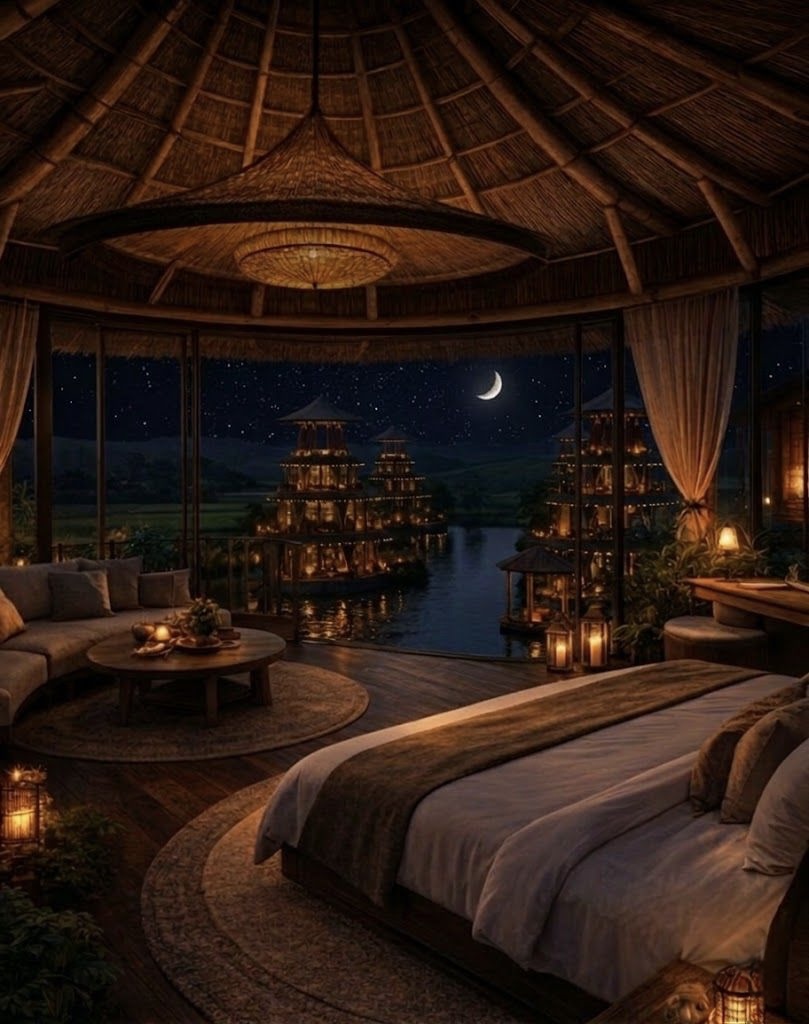
Internally, the cottages were planned around vertical expansion rather than horizontal sprawl. Bathing spaces, foyers, circulation elements, sleeping zones, and viewing decks unfold across staggered levels to heighten the experience of transition, elevation, and visual release. The interiors intentionally avoid density and excess, allowing openness, proportion, light, and surrounding scenery to become the primary spatial luxuries of the retreat.
Architecturally, the project synthesizes indigenous construction intelligence with a contemporary hospitality sensibility. The roofscapes subtly borrow from Assamese and Bhutanese influences while being recalibrated to negotiate intense monsoon exposure, prolonged humidity, and climatic durability. Deep projecting roofs, elevated structural systems, porous skins, ventilated envelopes, and layered bamboo assemblies together establish an architecture that feels breathable, resilient, and intrinsically tied to its environment.
From a structural standpoint, The Hollong investigates bamboo as a high-performance construction material within a demanding hospitality typology situated in a severe seismic zone. Lightweight elevated frameworks reduce ground intervention while enhancing adaptability against seismic movement and water-related environmental pressures. Long-span bamboo members, suspended connectors, layered roof systems, and articulated tower structures collectively demonstrate how traditional materials can be re-engineered into sophisticated contemporary infrastructure without losing their regional authenticity.
The Hollong ultimately proposes a quieter and more rooted vision for future hospitality in ecologically sensitive territories — one where luxury emerges not from excess, but from proximity to landscape, climatic intimacy, cultural memory, and the experience of inhabiting nature with heightened awareness.